Why Are 3D Prints Failing?
What Usually Causes 3D Printing Failures
3D prints usually fail because of incorrect parameters, poor metal powder, improper build preparation, or machine problems. For manufacturers, these issues can lead to wasted material, longer production times, and inconsistent part quality.
The risk becomes more important when an industrial Metal 3D Printer is used for high-value metal components. A stable printing process requires the right combination of equipment, materials, and parameters. Understanding the common causes of failure can help manufacturers avoid repeated problems.
Common Reasons Why 3D Prints Fail
Incorrect Printing Parameters
Printing parameters directly affect how metal powder melts and bonds during the build. Laser power, scanning speed, and layer thickness need to match the selected material and part design.
Low laser power may cause incomplete melting and internal pores. Excessive power can create too much heat and increase the risk of deformation. Scanning speed also affects energy input. A speed that is too high may produce weak bonding, while a speed that is too low can cause heat accumulation.
Layer thickness affects both layer bonding and surface quality. Manufacturers should use tested parameter sets instead of applying the same settings to every material or component.
Poor Material Quality
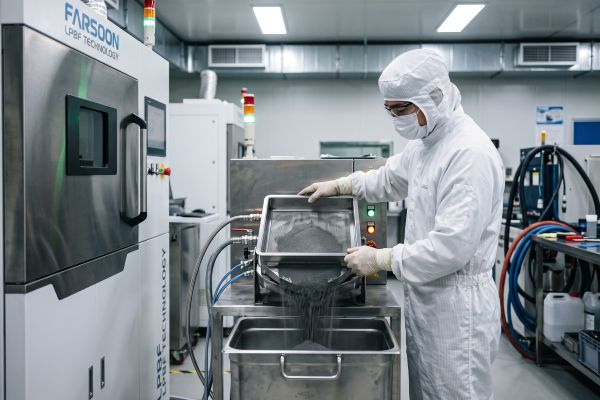
Metal powder quality is another common cause of failed prints. Powder needs suitable particle size distribution, flowability, and chemical stability.
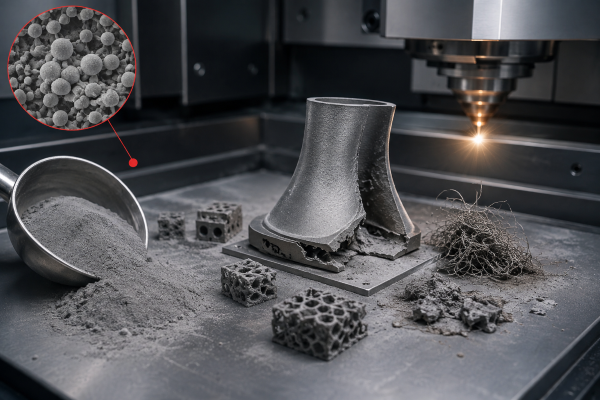
If particle sizes are inconsistent, the powder may not spread evenly across the build platform. Poor flowability can create gaps or uneven powder layers. High oxygen content can also affect material properties and increase the risk of defects.
Manufacturers should therefore check powder quality before production. Proper storage and handling are also important for maintaining consistent material performance.
Improper Build Preparation
Some failures are caused by decisions made before printing begins. Build orientation, support structures, and thermal stress all affect the final component.
Complex overhangs may require sufficient support to prevent deformation during printing. Build orientation can also affect part strength, surface quality, and support requirements.
Thermal stress is another concern. Metal parts experience repeated heating and cooling during the build. Uneven heat distribution can create residual stress, which may lead to warping or cracking.
Machine Calibration Problems
A Metal 3D Printer also needs accurate calibration to maintain stable production. Problems with the optical system can affect laser positioning and energy distribution.
The powder spreading system must create a consistent powder layer for each build cycle. Any irregularity can affect the melting process and lead to defects.
Temperature control also matters. Unstable chamber or build platform temperatures can change the thermal conditions of the part. Regular calibration and maintenance can help identify these problems before they affect production.
How to Reduce Metal 3D Printing Failures
Reducing print failures requires control over the entire manufacturing process. First, manufacturers should choose a Metal 3D Printer that matches their materials, part geometry, and production volume. Equipment stability is especially important for continuous industrial production.
Engineers should then optimize laser power, scanning speed, layer thickness, and other process parameters. Using validated settings can reduce unnecessary trial and error.
Material inspection should also be part of the production process. Manufacturers need to check powder condition and follow suitable storage procedures.
Regular maintenance is equally important. Operators should inspect the optical system, powder spreading system, and temperature control components. Quality checks after printing can also identify dimensional or structural problems.
Conclusion
3D printing failures can result from parameter errors, poor powder quality, unsuitable build preparation, or equipment problems. Manufacturers can reduce these risks by controlling materials, processes, and machine conditions together.
Choosing the right Metal 3D Printer is particularly important. A suitable machine should match the required materials, part designs, production volume, and quality standards. If you are looking for a Metal 3D Printer for your production needs, feel free to contact us. Our team can recommend suitable equipment based on your application and provide technical support for your metal additive manufacturing requirements.