Is Metal 3D Printing Stronger Than CNC?
Strength Is More Than Material Density
Strength is one of the most important factors when selecting a manufacturing method for metal parts. When comparing Metal 3D printing with CNC machining, many engineers want to know which process can produce stronger components.
The answer is not simply that one technology is stronger than the other. The final performance of a metal part depends on several factors, including material selection, part design, manufacturing process, and application requirements.
CNC machining has been widely used for decades because it can produce accurate and reliable metal components. Meanwhile, Metal 3D Printers have created new possibilities by allowing manufacturers to create complex structures that are difficult to produce through traditional methods.
In many cases, the strength advantage does not come only from the manufacturing process itself. A well-designed metal 3D printed part may outperform a traditionally manufactured part because engineers can optimize the structure according to actual performance requirements.
How Metal 3D Printing and CNC Create Parts in Different Ways
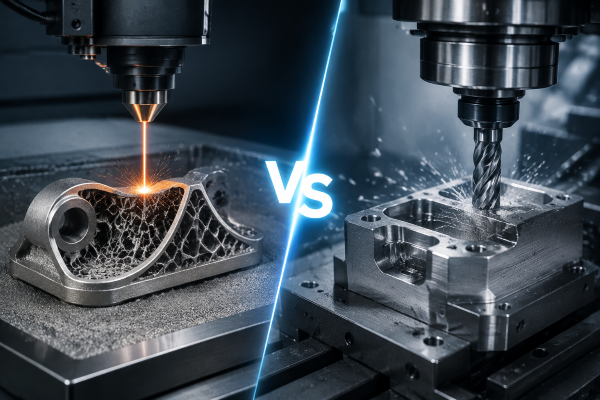
The main difference between Metal 3D printing and CNC machining is how material is processed.
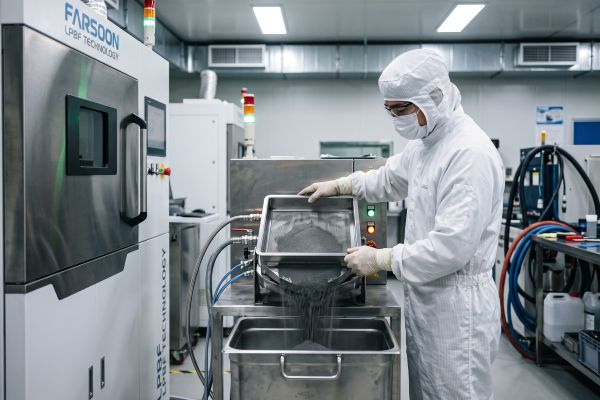
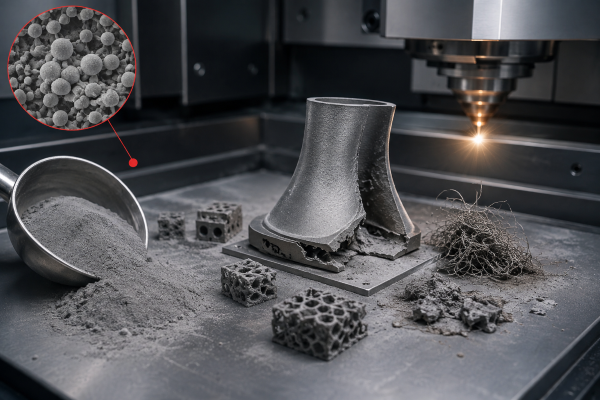
Metal 3D Printers use an additive manufacturing approach. Instead of starting with a solid block, the machine creates a component by adding material layer by layer. Technologies such as SLM technology use a laser to selectively melt metal powder and build the final part based on a digital model.
This manufacturing method gives engineers more freedom when designing components. Features such as internal channels, lattice structures, and complex geometries can be produced without the limitations of traditional cutting tools.
CNC machining follows a different principle. It is a subtractive manufacturing process that creates parts by removing material from a larger metal block. Cutting tools shape the material until the required geometry is achieved.
Because CNC removes material, the process is highly effective for producing precise parts with relatively simple structures. However, some complex designs may require multiple machining steps or may not be practical to manufacture.
The different production methods directly influence how engineers approach part design and performance optimization.
Which Produces Stronger Metal Parts
There is no universal answer because strength depends on more than the manufacturing method.
Material Density and Internal Structure
CNC machining creates parts from solid metal materials, which provides excellent density and consistent mechanical properties. This is one reason CNC remains popular for applications requiring predictable performance.
Modern Metal 3D printing technologies can also produce dense metal components with strong mechanical properties. However, the final result depends on factors such as powder quality, printing parameters, build orientation, and post-processing.
For example, SLM-produced parts can achieve high density when the printing process is properly optimized. Additional heat treatment may also improve mechanical performance and reduce internal stress.
Tensile Strength and Fatigue Resistance
Tensile strength and fatigue resistance are important considerations for many industrial applications.
CNC machining benefits from a mature manufacturing process. Engineers have extensive experience with material behavior and production control, making it easier to predict part performance.
Metal 3D Printers have also become suitable for demanding applications where strength is critical. With optimized printing conditions, materials such as titanium alloys, aluminum alloys, and stainless steel can achieve excellent mechanical properties.
However, engineers need to consider the complete production process. Printing direction, layer bonding, surface treatment, and post-processing can all influence the final strength of a component.
The Influence of Part Design
Part design is where Metal 3D printing can provide a significant advantage.
Traditional machining often requires designs that allow cutting tools to access different areas of the part. This limitation can make some internal structures or lightweight designs difficult to manufacture.
Metal 3D printing removes many of these restrictions. Engineers can create topology-optimized structures that place material only where it is needed. This can reduce weight while maintaining strength.
For some applications, a lighter and optimized 3D printed component may provide better overall performance than a heavier machined part.
Why Metal 3D Printing Can Be Stronger for Complex Designs
The biggest advantage of Metal 3D Printers is not that they always produce stronger materials, but that they allow engineers to create better-performing designs.
For aerospace components, reducing weight while maintaining strength is often a major goal. Metal 3D printing can create lightweight structures that would be difficult to manufacture using CNC machining.
Internal channels are another example. Cooling channels, fluid passages, and complex internal structures can often be produced more efficiently with additive manufacturing.
Topology optimization is also widely used with metal 3D printing. Engineers can analyze where stress occurs and remove unnecessary material from low-load areas while keeping strength in critical sections.
These design advantages make Metal 3D printing especially valuable for complex components, customized parts, and low-volume production.
Why CNC Machining Still Remains Important
Although Metal 3D printing offers new design possibilities, CNC machining remains an essential manufacturing technology.
One major advantage of CNC machining is accuracy. Modern CNC equipment can achieve very tight tolerances, making it suitable for parts that require precise dimensions.
CNC machining also provides excellent surface finish. Many machined components can be used directly after production with limited additional processing.
Another important advantage is production maturity. CNC technology has been developed for many years, and manufacturers have established reliable workflows for material selection, quality control, and mass production.
For simple geometries, large production quantities, and applications that require consistent precision, CNC machining is often the more practical choice.
How Manufacturers Choose Between Metal 3D Printing and CNC
The choice between Metal 3D printing and CNC machining depends on the requirements of the specific application.
Metal 3D Printers are often a better choice for:
- Complex geometries
- Lightweight structures
- Customized components
- Low-volume production
- Parts requiring internal features
CNC machining is often more suitable for:
- Simple designs
- High-volume production
- Parts requiring excellent surface finish
- Applications with strict dimensional requirements
In many manufacturing environments, the two technologies can work together. Companies may use Metal 3D printing to create complex structures and use CNC machining for final finishing or precision surfaces.
Conclusion
Metal 3D printing and CNC machining each have their own strengths. The better choice depends on the specific requirements of the part, including design complexity, production volume, and performance goals.
For manufacturers evaluating a new production method, understanding these differences is the key to selecting the right technology.
If you are looking for a reliable Metal 3D Printer solution, please contact us for professional support.