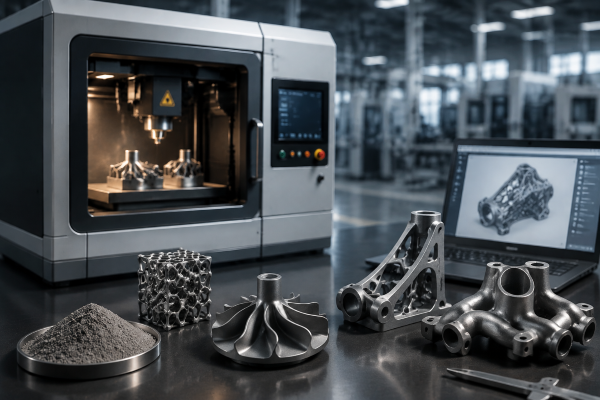
What to Look for in a Production-Grade Metal 3D Printer for Copper Alloys
Selecting an industrial-grade Metal 3D Printer for copper and copper alloys requires evaluating specific hardware parameters that standard selective laser melting systems cannot provide. Copper materials like pure copper (OFHC) and chromium zirconium copper (CuCrZr) are in high demand across electric vehicle heat exchangers, liquid rocket engine thrust chambers, and induction coils. However, standard machines often fail because copper reflects conventional laser wavelengths and dissipates thermal energy rapidly during laser exposure.
Manufacturing high-conductivity components demands specialized hardware engineering. Industrial buyers must understand why standard machinery fails and how dedicated systems solve these thermodynamic issues. High-power density, optical isolation, ultra-pure chamber environments, and active thermal management form the foundation of successful copper additive manufacturing. This comprehensive guide outlines the critical mechanical, optical, and atmospheric capabilities required in modern equipment to help manufacturing teams make informed procurement decisions.
Why Standard Laser Systems Struggle with Copper Alloys
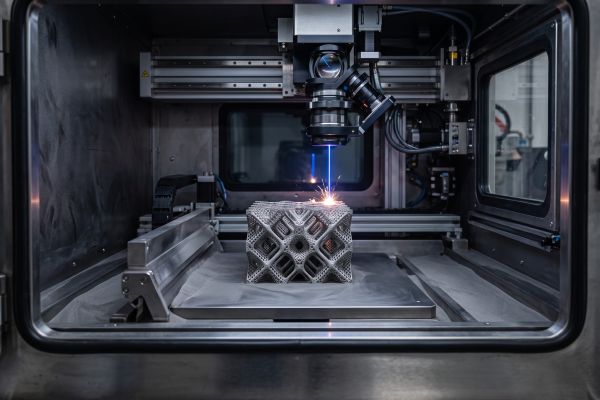
Processing copper poses severe physical hurdles that standard equipment cannot handle. Pure copper reflects over 90% of standard infrared laser energy at a 1064 nm wavelength. This high reflectivity prevents sufficient energy coupling into the powder bed, reflecting the bulk of nominal beam output away from the focal plane. As a result, standard laser sources cannot easily initiate a stable liquid melt pool without utilizing extreme, potentially damaging power concentrations.
Copper alloys also feature extreme thermal conductivity, often exceeding 300 W/(m·K). When the laser beam scans across the powder bed, heat dissipates away from the melt pool almost instantly. This rapid heat loss causes cold-lap defects, severe lack-of-fusion porosity, and rapid cooling cracks along grain boundaries. To overcome these physics constraints, industrial Metal 3D Printers require specialized energy sources, stable thermal stabilization hardware, and inert environmental controls. Without these specialized subsystems, printed parts suffer from severe porosity, low tensile strength, and unacceptable electrical conductivity drops below industrial acceptance levels.
Laser Source Selection for Your Metal 3D Printer
The optical core determines whether a machine can successfully melt reflective copper alloys without catastrophic failure.
Green Laser Systems (515 nm / 532 nm)
Short-wavelength green lasers achieve an absorption rate above 35% to 40% on copper powder surfaces at room temperature. This high initial absorption allows stable conduction-mode melting with moderate laser power, typically between 500W and 1000W. Because the green wavelength couples directly into the material, the melt pool remains stable, quiet, and predictable. It eliminates the chaotic keyhole instabilities and excessive vapor plume dynamics seen in infrared systems. Consequently, green laser technology delivers near-zero spatter generation, clean optical protective windows, and consistently dense microstructure results exceeding 99.8% relative density.
High-Power Infrared Lasers (1000W – 2000W)
High-power fiber lasers overcome low ambient absorption by forcing deep keyhole-mode melting through concentrated energy density. At extreme energy thresholds, the vaporized material forms a vapor cavity that traps incident infrared light through internal reflections. This process increases effective optical absorption.
This approach provides a cost-effective path for processing alloyed materials like CuCrZr and CuNi2SiCr, where alloying elements slightly lower thermal conductivity and improve base absorption. However, high-power infrared systems demand advanced beam shaping, such as ring-mode configurations or dynamic oscillation, to stabilize the keyhole wall and suppress large spatter ejections.
Back-Reflection Protection Mechanisms
Reflected laser light presents an existential risk to optical hardware. Highly polished copper powder particles act as miniature mirrors, scattering coherent laser beams back along the optical axis. Unmitigated back-reflection travels straight into galvo scanning mirrors, dynamic focusing modules, collimator lenses, and sensitive fiber laser diodes, causing catastrophic thermal fractures.
A production-grade Metal 3D Printer designed for copper must incorporate multi-stage optical isolation systems. These safeguards include polarized optical isolators, active photodiode reflection sensors, and fast hardware interlocks. Real-time sensors track back-scattered power levels continuously. If back-reflection exceeds calibrated safety thresholds, the safety loop interrupts laser emission within microseconds, preventing optical degradation and unbudgeted downtime.
Variable Spot Size and Dynamic Optical Zoom
Copper additive processing requires dynamic energy distribution across different geometric regions. Thin-walled cooling passages, intricate heat exchanger fins, and complex lattice nodes require a tight, highly concentrated laser spot to achieve precise feature resolution. Conversely, solid bulk core regions require larger spot sizes to maximize powder melting rates and prevent productivity bottlenecks. Systems equipped with dynamic zoom optics adjust the spot diameter dynamically on-the-fly without requiring mechanical lens changes, balancing fine resolution with high build rates.
Atmospheric Control and Oxygen Limits in Metal 3D Printing
Copper exhibits an affinity for oxygen at elevated temperatures. Even minor atmospheric contamination leads to copper oxide inclusions, degraded mechanical toughness, and reduced electrical performance.
Sub-50 ppm Oxygen Baseline
Industrial Metal 3D Printing for copper requires sustained oxygen levels below 50 ppm (parts per million). High-grade machines designed for pure OFHC copper target sustained levels below 10 ppm throughout the build cycle. At elevated melting temperatures, copper absorbs trace oxygen from the build atmosphere, creating cuprous oxide ($Cu_2O$) films along grain boundaries. These oxide layers inhibit atomic sintering, introduce brittleness, and cause intergranular stress cracking during post-print thermal treatments.
Hermetic Chamber Integrity and Dynamic Purging
Achieving and maintaining sub-50 ppm oxygen levels requires vacuum-tight chamber engineering. High-performance machines utilize continuous seam-welded chambers, reinforced access door clamps, and fluoropolymer seals to prevent ambient air ingress. Advanced units feature automated pressure-decay leak testing before every job cycle, alerting technicians to degraded seals before gas consumption begins. Multi-point zirconium oxide or electrochemical oxygen sensors measure atmospheric purity at both the chamber inlet and outlet, ensuring uniform gas displacement without stagnant air pockets.
Laminar Inert Gas Flow and Condensate Management
High-density copper processing generates fine smoke and condensate that absorb laser energy. A uniform argon or nitrogen flow field sweeps condensate away from the optical window without creating turbulent eddies above the melt pool. High-mass copper soot particles tend to settle back into the powder bed if gas velocity drops.
Therefore, fluid dynamics within the process chamber must maintain consistent laminar velocity across the entire build platform. Laminar flow removes process byproducts directly into primary filter arrays, preventing laser attenuation and beam scattering across large build areas.
Electrical and Thermal Conductivity Impact
Minimizing residual oxygen directly protects the final part’s electrical performance, enabling pure copper parts to reach up to 95% to 100% IACS (International Annealed Copper Standard). When oxygen is tightly controlled, thermal conductivity matches electrical gains, reaching 380 to 400 W/(m·K). Without strict atmospheric control, parts exhibit high internal resistance, rendering them unsuitable for high-frequency induction coils, busbars, and aerospace heat dissipation components.
Thermal Management in Modern Metal 3D Printers
High thermal dissipation makes copper components prone to residual stress accumulation, delamination, and platform detachment.
High-Temperature Platform Preheating
Standard 100°C or 200°C build platforms are insufficient for high-conductivity alloys. Production-grade Metal 3D Printers incorporate induction or ceramic resistance heaters that maintain continuous substrate temperatures between 200°C and 500°C. Maintaining elevated temperatures during the entire exposure sequence reduces the sharp thermal gradient between the molten pool and the solidified substrate, moderating cooling rates.
Stress Relieving and Crack Mitigation
Sustained high-temperature preheating acts as an in-situ stress relief system. By lowering thermal gradients, the process suppresses the build-up of plastic strain in lower layers as successive layers are added. This thermal control prevents parts from warping off baseplates, eliminates edge curling, and prevents support structure failure during large-cross-section transitions. For crack-sensitive copper alloys, consistent platform heating is the primary factor determining structural yield.
Thermal Isolation Design
High-heat build chambers must utilize active cooling barriers beneath the build platform to prevent thermal distortion from damaging precision Z-axis ball screws and optical encoders. Structural baseplates must feature circulating liquid cooling channels and high-density ceramic insulation barriers. This thermal break prevents extreme heat from expanding the machine frame, preserving micrometric kinematic positioning accuracy throughout multi-day build runs.
Powder Recoating and Flowability Adaptation
Copper powders are dense and tend to agglomerate depending on atomization quality and moisture absorption, placing demanding requirements on the mechanical re-coater.
Recoater Blade Selection
- Ceramic Blades (Silicon Nitride / Zirconia): Rigid ceramic blades offer high wear resistance against abrasive copper particles. They maintain precise edge straightness over long build cycles, ensuring uniform layer thickness for thin-walled heat exchangers.
- Flexible Blades (Silicone / Polyurethane): Flexible wiper blades deform slightly when encountering protruding part edges or small spatter balls. This flexibility prevents catastrophic recoater blade crashes, protecting the mechanical drive system during parameter testing.
- High-Speed Steel (HSS) Blades: Hardened steel tools provide structural rigidity and thermal resistance, making them well-suited for high-temperature preheated powder beds where polymer blades would degrade.
Bi-Directional Powder Spreading
Bi-directional recoating cuts idle machine time, which is critical when depositing thousands of fine 30-micron layers. Instead of returning the recoater arm empty after each pass, a bi-directional mechanism deposits fresh powder on both forward and reverse strokes. This system shortens non-exposure recoating cycles by up to 40%, significantly accelerating build times for tall copper parts.
Automated Powder Handling and Closed-Loop Sieving
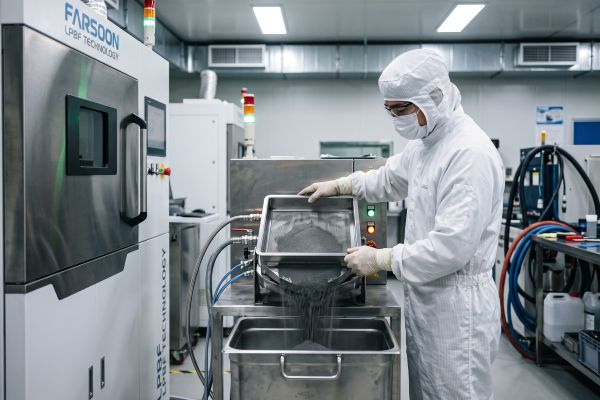
Copper powder oxidizes and absorbs ambient humidity when exposed to open room air. Moisture creates hydrogen porosity during melting and impairs powder flowability through the hopper. A dedicated Metal 3D Printer for copper must include fully closed-loop powder loading, ultrasonic sieving, and inert gas transport systems. Keeping the powder under continuous argon or nitrogen protection from storage bottle to overflow container maintains stable powder quality across repeated recycling cycles.
Evaluation Checklist for Copper Metal 3D Printing Platforms
Before investing in a dedicated production unit, engineering teams must evaluate hardware capabilities across core subsystems. Compare candidate platforms against these industry specifications:
| Critical Parameter | Production Baseline | Recommended High-Performance Target |
| Laser Configuration | 1000W IR or 500W Green Laser | Dual 500W Green Laser / Multi-Beam System |
| Back-Reflection Safeguard | Hardware optical isolator | Multi-stage photodiode monitoring & fast shutoff |
| Chamber Oxygen Level | < 100 ppm | < 20 ppm with laminar gas recirculation |
| Substrate Preheating | 200°C baseplate heater | 500°C induction or high-uniformity ceramic array |
| Recoater Blade Type | Wear-resistant tool steel | Modular interchangeable (Ceramic / Flexible Polymer) |
| Electrical Conductivity Target | > 85% IACS (CuCrZr) | > 98% IACS (Pure Copper) |
Evaluating a production-grade Metal 3D Printer for copper alloys requires looking beyond general build volume and nominal scan speed. Long-term manufacturing success relies on laser wavelength absorption, tight oxygen barrier controls, high-temperature substrate heating, and rugged optical protection. Integrating these capabilities ensures your Metal 3D Printing operations deliver pore-free copper components with maximum electrical conductivity and thermal performance.