Is 3D Printing Losing Popularity?
3D Printing Is Changing Rather Than Disappearing
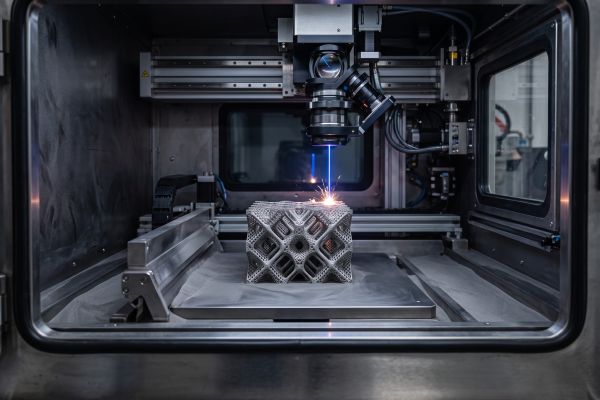
3D Printing has developed from a rapid prototyping technology into an advanced manufacturing solution used in aerospace, medical, automotive, and industrial applications. In the early stage, many companies mainly used 3D printers for concept models, design testing, and prototype development. Today, manufacturers are exploring more production applications, with Metal 3D Printer technology supporting the production of complex and high-performance components.
The question of whether 3D Printing is losing popularity comes from the difference between early expectations and actual market development. Many people once believed that desktop 3D printers would quickly enter millions of homes and completely change the way products were manufactured.
However, the reality is different. 3D Printing is not disappearing. Instead, the industry is becoming more focused on professional and industrial applications. Companies are investing in advanced solutions that improve production efficiency, design flexibility, and manufacturing capabilities.
Why Do Some People Think 3D Printing Is Losing Popularity?
Several factors have created the impression that the 3D Printing industry is slowing down.
Early Expectations Were Too High
When 3D printing first gained worldwide attention, many people expected it to become a common household technology. Consumer 3D printers were promoted as tools that could allow users to create different products at home.
However, these expectations were difficult to achieve. Home users often needed technical knowledge, suitable materials, and post-processing skills to obtain reliable results. The process was more complex than many people originally expected.
This does not mean the technology has lost value. Instead, it shows that the strongest applications of additive manufacturing are often found in industries where customization, complexity, and performance are more important.
Consumer Market Growth Slowed
The consumer market for desktop 3D printers has become more stable in recent years. Many hobby users have explored the technology, but large-scale household adoption has not developed as quickly as expected.
For everyday products, traditional manufacturing methods still provide advantages in cost and production speed. As a result, manufacturers have gradually shifted their focus toward professional applications.
This market adjustment has allowed companies to develop more advanced equipment, including industrial systems designed for reliable production environments.
Industrial Adoption Takes Time
Industrial transformation usually requires long-term testing and improvement. Companies need to evaluate equipment reliability, material performance, production costs, and quality control before adopting new manufacturing technologies.
For industries such as aerospace, medical, and automotive manufacturing, safety and consistency are critical. Therefore, industrial additive manufacturing adoption is a gradual process, but it creates more sustainable growth opportunities.
Industrial 3D Printing Continues to Grow
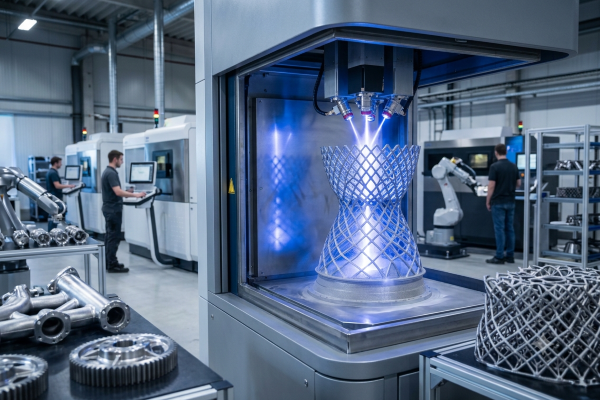
Although consumer interest has changed, industrial applications of 3D Printing continue to expand across multiple industries.
In aerospace, manufacturers use additive manufacturing to create lightweight components with complex structures. These parts can reduce weight while maintaining strength, improving overall system performance.
The medical industry also benefits from customized manufacturing. Companies use 3D printing technology to produce implants, surgical models, and specialized medical components based on specific requirements.
In automotive manufacturing, additive manufacturing helps companies develop prototypes faster, produce customized parts, and optimize production tools.
Among these applications, Metal 3D Printing has become one of the most important technologies for industrial production. It enables manufacturers to produce strong and complex metal components that are difficult to create with traditional methods.
Modern Metal 3D Printers are helping industries move beyond prototyping and toward functional part production. With larger build volumes, improved accuracy, and better process control, these machines provide new possibilities for advanced manufacturing.
Why Metal 3D Printing Remains Important
Metal 3D Printing remains important because it provides unique advantages for high-value manufacturing.
One major advantage is the ability to produce complex components. Traditional manufacturing methods often require multiple processing steps or specialized tooling. In contrast, additive manufacturing allows engineers to create optimized structures with fewer design limitations.
Another advantage is the production of high-performance parts. Industries such as aerospace, energy, and medical equipment require components with excellent strength, durability, and precision. Metal 3D printed parts can meet these demanding requirements while reducing material waste.
Customization is also a key benefit. Manufacturers can produce small batches or customized components without the high tooling costs associated with traditional manufacturing. This flexibility makes Metal 3D Printer technology valuable for industries with specialized production needs.
Challenges Still Facing the 3D Printing Industry
Although 3D Printing continues to develop, several challenges still need to be addressed.
Equipment cost remains one of the biggest barriers. Industrial Metal 3D Printers require significant investment, especially for advanced manufacturing applications. Companies need to consider equipment costs, maintenance requirements, and operational expenses before adoption.
Material cost is another challenge. High-quality metal powders and specialized alloys can increase production costs. Continued material development and improved recycling processes will help reduce these limitations.
Production speed is also an important factor. Although modern machines are becoming faster, some additive manufacturing processes still cannot compete with traditional mass production methods for extremely high-volume manufacturing.
Future improvements in machine performance, automation, and software optimization will help overcome these challenges.
The Future Direction of 3D Printing
The future of 3D Printing will focus on improving efficiency, automation, and intelligent manufacturing.
Artificial intelligence will play a larger role in optimizing designs and production processes. AI-based tools can help engineers create better structures, reduce material usage, and improve manufacturing efficiency.
Automation will also become increasingly important. Automated powder management, real-time monitoring, and intelligent control systems can improve production stability and reduce manual operations.
At the same time, new materials and improved Metal 3D Printer technology will expand industrial applications. Faster machines, larger build volumes, and more advanced materials will allow additive manufacturing to enter more demanding production fields.
Conclusion
3D Printing is not losing popularity. Instead, the industry is moving toward more practical and valuable applications. The market is shifting from consumer expectations to industrial solutions where additive manufacturing can provide real advantages.
With continuous improvements in Metal 3D Printing, automation, materials, and Metal 3D Printer technology, additive manufacturing will continue to play an important role in the future of global manufacturing. Contact us to learn more about advanced 3D printing solutions and explore professional Metal 3D Printer options for your application needs.