12 Essential Post-Processing Methods for Metal Additive Manufacturing
1. Understanding Additive Manufacturing (AM) vs. Traditional Manufacturing
Additive Manufacturing (AM), commonly known as 3D printing, has transformed modern manufacturing by fundamentally changing how metal components are produced. Unlike traditional subtractive processes—such as milling, turning, and electrical discharge machining (EDM)—which remove material from a solid workpiece, AM creates parts by depositing or selectively melting material layer by layer directly from a digital model.
The process begins with a three-dimensional Computer-Aided Design (CAD) model. Specialized software slices the model into hundreds or thousands of thin layers, which are then sequentially manufactured by an industrial metal 3D printer. Each layer is precisely fused to the previous one, gradually building the final component.
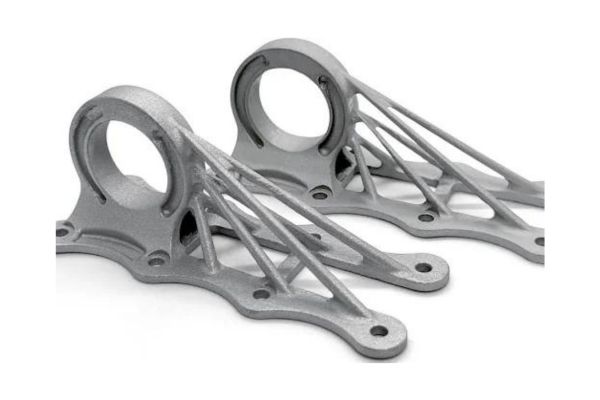
This layer-by-layer approach enables engineers to manufacture lightweight structures, intricate internal channels, lattice geometries, and integrated functional features that would be difficult—or even impossible—to produce using conventional machining methods. Over the past two decades, industrial technologies such as Selective Laser Melting (SLM) and Laser Metal Deposition (LMD) have matured into reliable production solutions, helping manufacturers reduce material waste, shorten development cycles, and improve design flexibility.
2. Why Post-Processing Matters in Metal Additive Manufacturing
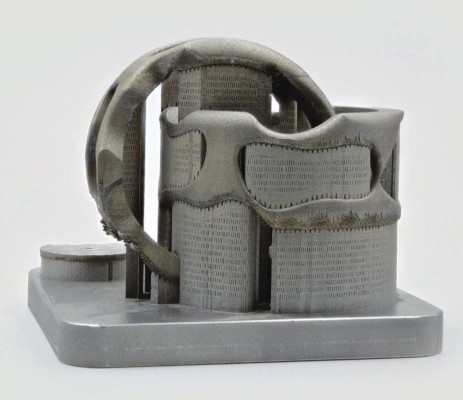
Although metal additive manufacturing offers exceptional design freedom, freshly printed parts are rarely suitable for direct end-use applications. Components removed from the build chamber often exhibit rough surface finishes, support structures, residual powder, and residual stresses that must be addressed before the part can meet engineering requirements.
Post-processing is therefore an essential stage of the manufacturing workflow. Depending on the application, it may include support removal, heat treatment, machining, polishing, cleaning, or surface finishing to improve dimensional accuracy, mechanical performance, fatigue resistance, and overall appearance.
While optimization of printing parameters, build orientation, scan strategies, and powder quality can significantly improve the as-built surface, these measures cannot completely eliminate the inherent roughness created by the layer-by-layer manufacturing process. As a result, post-processing remains indispensable for producing production-grade metal components.
The Design-to-Cost Challenge
One of additive manufacturing’s greatest strengths is its ability to create highly complex geometries. However, these same complex features often make finishing operations significantly more difficult.
Poor surface quality can become a source of stress concentration, reducing fatigue life and increasing the risk of crack initiation in demanding applications such as aerospace, medical, and energy industries. In addition, post-processing can represent one of the largest cost contributors in the manufacturing chain, with surface finishing alone accounting for up to 60% of the total production cost for certain metal AM components.
Improving post-processing efficiency is therefore essential for reducing manufacturing costs while maintaining the performance advantages offered by additive manufacturing.
3. Key Objectives of Modern AM Post-Processing
Today’s industrial post-processing workflow typically combines multiple operations, including powder removal, stress-relief heat treatment, wire EDM, support removal, CNC machining, polishing, cleaning, and Hot Isostatic Pressing (HIP). An effective finishing strategy focuses on three primary objectives:
Improve Process Consistency
Optimize printing parameters to produce more uniform parts, reducing variation and enabling more predictable, automated finishing operations.
Handle Complex Geometries
Develop finishing technologies capable of reaching intricate internal channels, lattice structures, and difficult-to-access surfaces without compromising dimensional accuracy.
Reduce Overall Manufacturing Cost
Increase automation, shorten processing times, minimize manual labor, and improve production efficiency to lower the total cost per component.
4. 12 Essential Post-Processing Methods for Metal Additive Manufacturing
1. Manual Polishing
Manual polishing remains one of the most common finishing techniques for low-volume production and customized parts. Skilled technicians use abrasive papers, polishing wheels, and handheld tools to remove surface irregularities and improve appearance.
Although capable of producing excellent cosmetic finishes, manual polishing is labor-intensive, highly dependent on operator experience, and difficult to standardize for large-scale manufacturing. Proper dust collection and personal protective equipment (PPE) are also necessary to ensure workplace safety.
2. Sandblasting and Shot Peening
Sandblasting uses high-speed abrasive particles to clean surfaces, remove loosely bonded powder, and create a uniform matte finish.
Shot peening, while similar in appearance, introduces compressive residual stress into the surface, improving fatigue resistance and extending component life. These processes are widely used in aerospace, automotive, and industrial applications.
3. Centrifugal Barrel Finishing
Centrifugal barrel finishing accelerates abrasive media using high rotational forces, significantly increasing material removal efficiency compared with conventional tumbling methods.
It is particularly suitable for batch production of small and medium-sized components and can be integrated with automated media separation systems to improve production efficiency.
4. Vibratory Finishing
Vibratory finishing moves abrasive media and parts together using controlled vibration, gradually smoothing surfaces and removing burrs.
The process is economical, highly scalable, and available in numerous machine configurations. It is commonly integrated into automated production lines for consistent, high-volume finishing.
5. Drag Finishing
In drag finishing, components are securely clamped while rotating through a stationary bed of abrasive media.
Because the media remains stationary while the parts move at high speed, drag finishing offers excellent process control, rapid cycle times, and outstanding polishing quality, making it ideal for precision tools, medical implants, and high-value metal components.
6. Electropolishing
Electropolishing removes a thin layer of metal through electrochemical dissolution, selectively smoothing microscopic surface peaks while improving corrosion resistance and cleanliness.
For complex lattice structures and internal features, chemical pre-treatment is often performed first to remove partially sintered powder before electropolishing produces a smoother final surface.
7. Plasma Polishing
Plasma polishing employs high current density within an electrolyte to selectively remove microscopic surface asperities.
The process rapidly reduces surface roughness while simultaneously cleaning the surface and enhancing corrosion resistance, making it especially suitable for medical devices, aerospace components, and precision metal parts.
8. CNC Grinding and Precision Polishing
CNC grinding delivers exceptional dimensional accuracy and controlled material removal for external surfaces and precision features.
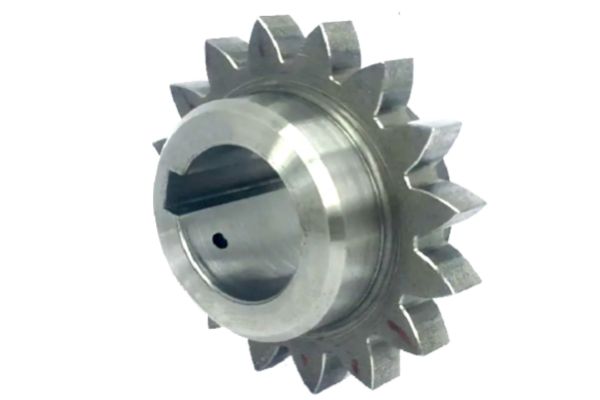
It is particularly effective for achieving tight tolerances and removing oxide layers after heat treatment. However, like most conventional machining methods, it is limited when processing complex internal passages.
9. Adaptive Grinding
Adaptive grinding uses intelligent force control and flexible tooling to automatically conform to changing surface geometry during machining.
This technology improves consistency across freeform surfaces and complex contours while reducing cycle times and improving finishing efficiency.
10. Ultrasonic Cleaning
Ultrasonic cleaning uses high-frequency sound waves to generate microscopic cavitation bubbles that effectively remove residual powder, polishing compounds, oils, and chemical contaminants from complex geometries.
It is frequently combined with automated washing, rinsing, drying, and inspection systems to streamline the final production stage.
11. Laser Polishing
Laser polishing utilizes a high-energy laser beam to locally remelt microscopic surface peaks. Surface tension naturally redistributes the molten material, significantly reducing roughness after solidification.
As a non-contact process, laser polishing is especially attractive for precision components with intricate geometries while minimizing mechanical distortion.
12. Abrasive Flow Machining (AFM)
Abrasive Flow Machining forces a highly viscous abrasive media through internal channels, cooling passages, and complex cavities that are inaccessible using conventional polishing tools.
AFM is widely recognized as one of the most effective finishing solutions for aerospace, medical, and energy components requiring exceptionally smooth internal flow paths.
Conclusion
Post-processing is no longer simply the final step of metal additive manufacturing—it is a critical factor that determines component quality, production efficiency, and overall manufacturing cost. Selecting the appropriate combination of finishing technologies enables manufacturers to improve surface quality, achieve tighter tolerances, extend service life, and unlock the full potential of metal 3D printing.
Whether producing prototypes or scaling to industrial production, an optimized post-processing strategy is essential for delivering reliable, high-performance metal components.
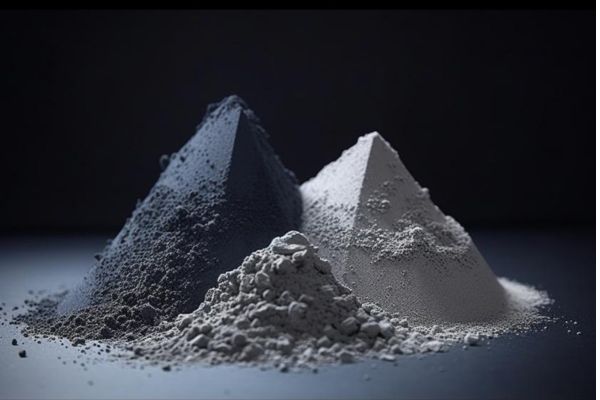
If you’re looking to improve your metal additive manufacturing workflow, TECHIN provides comprehensive solutions including industrial metal 3D printers, metal powders, supporting equipment, software, and application services. Our engineering team can help you optimize every stage of production—from printing to post-processing—to achieve higher quality, greater efficiency, and lower manufacturing costs. Contact TECHIN today to discuss your additive manufacturing requirements and discover the right solution for your business.
Content Credit: This article is based on technical information originally published by DeburringTec and authored by Qi Daozhang