Why Is Metal 3D Printing So Expensive?
Metal 3D printing is more expensive than many traditional 3D printing methods. The higher cost comes from materials, equipment, production conditions, labor, and post-processing. A Metal 3D Printer also requires more advanced systems to control the printing process and maintain consistent part quality.
However, a higher initial cost does not always mean higher manufacturing costs. For complex parts, low-volume production, and high-value applications, additive manufacturing can reduce waste and simplify production.
Why Metal 3D Printing Costs More Than Traditional 3D Printing
Metal materials usually cost more than common plastic printing materials. Metal 3D printing also requires more sophisticated equipment and a controlled production environment.
The process often uses high-power lasers, inert gas, and precise powder handling systems. These systems help control melting conditions and protect the material from contamination. Manufacturers also need strict process monitoring and quality control.
Post-processing adds another cost. Many metal parts require heat treatment, support removal, machining, or surface finishing before they can be used. Therefore, the printer price represents only part of the total manufacturing cost.
The Cost of Metal Powder
Metal powder is one of the most important operating costs. Producing suitable powder requires specialized manufacturing and quality control processes.
Particle size affects powder flow, packing behavior, and layer formation. Material purity is also important because contamination can affect the mechanical properties of the finished part.
Different alloys also have different prices. Stainless steel is often more affordable than titanium or some nickel-based alloys. Aluminum and other materials can offer different cost and performance characteristics.
Powder handling also requires attention. Operators need suitable storage, sieving, transfer, and recovery procedures. Some unused powder can be reused under controlled conditions, but manufacturers must monitor powder quality before reuse.
The High Cost of Metal 3D Printing Equipment
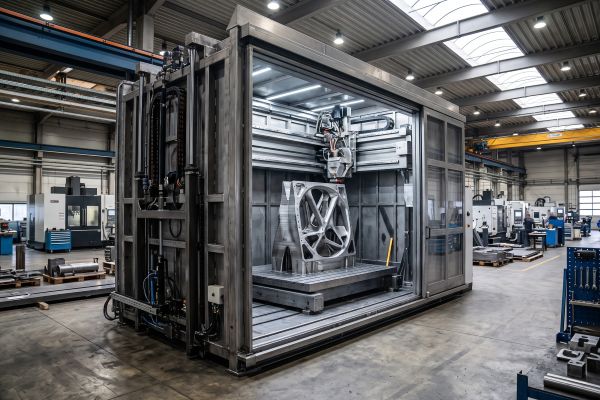
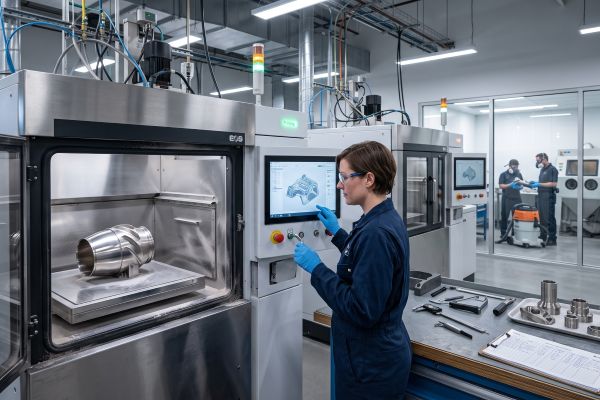
The equipment itself is another major reason for the high investment. A professional Metal 3D Printer contains several precision systems that must work together.
The laser system provides the energy needed to melt metal powder. The optical system controls how the laser reaches the build area. The build chamber provides a controlled environment for production.
Gas circulation removes oxygen and helps maintain suitable processing conditions. Powder delivery and recoating systems distribute powder evenly across the build platform. The control system coordinates these operations during printing.
Safety systems also increase equipment costs. Metal powder can require careful handling, while high-power lasers require appropriate protection. Reliable monitoring and process control further increase the complexity of the machine.
Post-Processing Adds to the Total Cost
Printing a metal part is often only the first manufacturing step. Heat treatment may be required to achieve the desired mechanical properties or reduce internal stress.
Operators may also need to remove supports and clean residual powder. Surface finishing can improve the appearance and functional performance of a part. CNC machining may be necessary when tight dimensional tolerances or specific surface finishes are required.
Inspection can add another cost. Depending on the application, manufacturers may use dimensional inspection, density testing, or other quality control methods.
This means the purchase price of a printer should not be treated as the final cost of a finished component.
Labor and Maintenance Costs
Metal additive manufacturing also requires skilled personnel. Operators need to prepare builds, manage materials, monitor production, and handle finished parts.
Regular maintenance is another important expense. Laser components, filters, recoating systems, and other parts may require inspection or replacement. Calibration helps maintain consistent printing performance over time.
Quality inspection also requires time and expertise. These labor and service costs can become significant when production volumes increase.
Why Metal 3D Printing Can Still Be Cost-Effective
Despite these expenses, Metal 3D Printing can provide strong economic benefits in the right applications.
Complex geometries are often difficult or expensive to produce with conventional machining. Additive manufacturing can create internal channels, lattice structures, and integrated features that reduce the need for multiple manufacturing steps.
Low-volume production can also benefit because manufacturers do not always need expensive molds or dedicated tooling. Customized components can be produced with fewer setup requirements.
Lightweight structures can reduce material usage in some applications. Part consolidation can also combine several components into one printed part. This approach may reduce assembly work and simplify the supply chain.
How to Evaluate the Real Cost of Metal 3D Printing
A realistic cost evaluation should consider more than the equipment purchase price. Buyers should examine the full manufacturing process:
Equipment cost + Material cost + Energy cost + Labor + Maintenance + Post-processing
This calculation provides a better basis for comparing different production methods and Metal 3D Printer options.
Buyers should also consider build volume, printing speed, laser configuration, material compatibility, automation, powder management, and after-sales service. A machine with a higher purchase price may offer better productivity or lower operating costs over its service life.
Conclusion
Metal 3D printing costs more because it combines expensive materials, advanced equipment, controlled production conditions, skilled labor, and post-processing. These factors increase the initial investment and operating expenses.
However, cost should always be evaluated against the application. Complex parts, customized components, low-volume production, lightweight structures, and high-value products can make additive manufacturing economically attractive. A complete cost analysis can help buyers choose the right technology instead of focusing only on the printer purchase price.
Looking for a reliable Metal 3D Printer? Contact us to explore the right solution for your production needs.