What Is Metal 3D Printing and How Does It Work?
Metal 3D printing is an additive manufacturing technology that uses metal powder to create parts layer by layer from a digital 3D model. Unlike traditional machining, it forms components by adding material instead of removing it. Common materials include stainless steel, titanium alloys, aluminum alloys, and nickel-based alloys.
How Does Metal 3D Printing Work?
The metal 3D printing process includes several key steps:
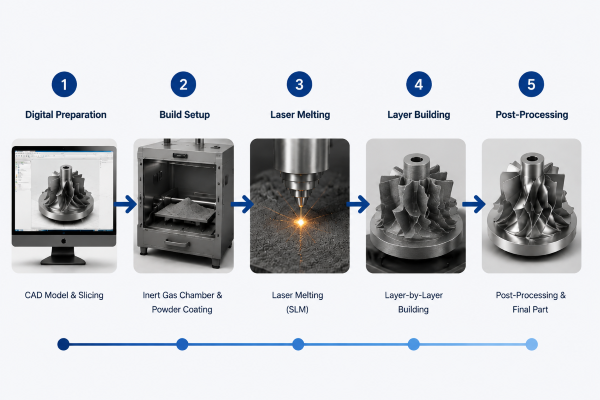
Step 1: 3D Model Preparation
The process begins with a 3D CAD model created using professional design software. The digital model is imported into slicing software, where it is converted into a series of thin layers.
During this stage, engineers define printing parameters such as layer thickness, scanning strategy, laser power, and scanning speed. These parameters determine how the machine builds each layer and directly influence the final accuracy, surface quality, and mechanical properties of the component.
Step 2: Build Chamber Preparation
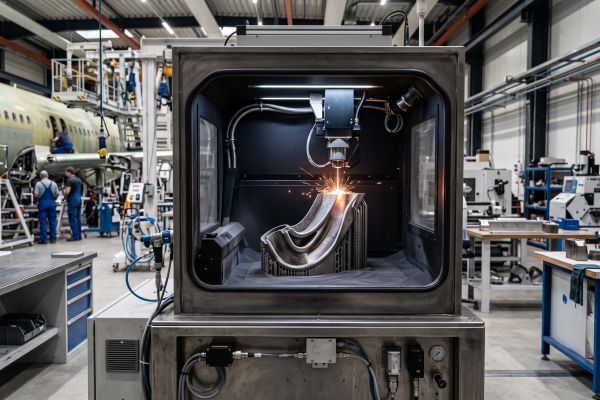
Before printing starts, the build chamber is prepared to create a stable manufacturing environment. The chamber is filled with an inert gas, such as argon, to minimize oxidation during the high-temperature melting process.
The build platform is heated to a specific temperature based on the material and printing requirements. This helps reduce thermal stress, improve powder fusion, and minimize deformation during the manufacturing process.
Step 3: Powder Layering
During metal 3D printing, the recoater system spreads a thin and uniform layer of metal powder across the build platform after the build chamber reaches the required conditions.
The powder layer thickness is precisely controlled according to the material properties and required part quality. The machine then prepares for laser scanning after the powder layer is evenly distributed.
Step 4: Laser Melting and Layer Formation
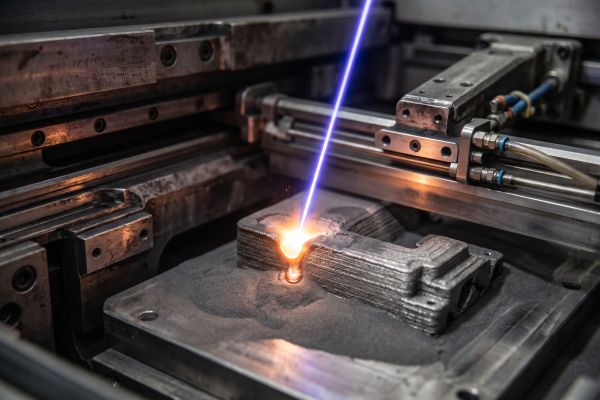
In SLM technology, a high-power laser selectively scans the cross-section of the component during the metal 3D printing process according to the digital model. The laser energy melts the metal powder particles, causing them to fuse together and form a solid metal layer.
After completing one layer, the build platform lowers by a preset distance. The recoater applies a new layer of metal powder, and the laser continues scanning the next section of the component.
This process is repeated layer by layer until the entire part is completed. During printing, support structures are added where necessary to connect the part with the build platform. These structures help maintain stability, reduce thermal deformation, improve heat transfer, and support complex geometries during manufacturing.
Step 5: Post-Processing
After printing is finished, the completed part remains surrounded by unused metal powder. The remaining powder is removed from the build area, and the printed component is separated from the manufacturing environment.
The part then undergoes post-processing procedures to achieve the required properties and quality. These procedures may include:
- Heat treatment: Relieves residual stress caused by repeated heating and cooling during printing.
- Support structure removal: Removes temporary supports and separates the component from the build platform.
- Surface finishing: Improves surface quality and achieves the required surface condition.
- Machining and inspection: Ensures final dimensions and meets specified quality requirements.
After these steps, the metal component reaches the required mechanical performance, dimensional accuracy, and surface quality for its intended use.
Conclusion
With the continuous development of metal 3D printing and metal additive manufacturing, advanced metal 3D printers provide efficient solutions for producing complex metal components. If you are planning to adopt metal 3D printing technology or select suitable equipment, our professional team can provide technical support and customized solutions based on your requirements.