Aerospace Industry Adopts Metal 3D Printing
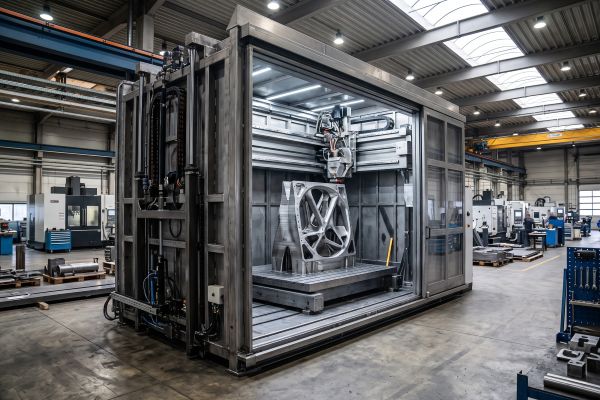
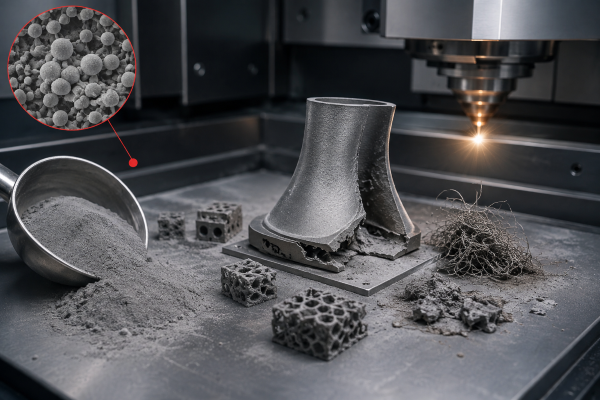
The aerospace industry is one of the earliest and strongest adopters of metal additive manufacturing. In recent years, its adoption has accelerated significantly as companies seek lighter, stronger, and more efficient aircraft components.
Metal 3D printing is now moving beyond prototyping into certified flight-ready production parts.
1. From Prototyping to Flight-Ready Components
Previously, metal additive manufacturing was mainly used for:
- Design validation
- Rapid prototyping
- Non-critical components
Today, aerospace companies are increasingly producing:
- Structural brackets
- Engine components
- Fuel system parts
- Heat-resistant assemblies
This shift is driven by improved material reliability and certification processes.
2. Weight Reduction and Fuel Efficienc
One of the biggest advantages of metal 3D printing in aerospace is lightweighting.
By using topology optimization and lattice structures, engineers can:
- Reduce part weight significantly
- Maintain or improve strength
- Improve fuel efficiency
- Extend component lifespan
This directly impacts operational cost savings in aviation.
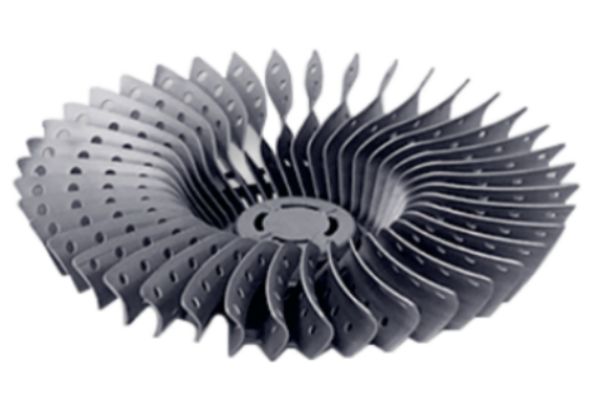
3. Complex Geometry for High-Performance Systems
Aerospace systems often require highly complex internal structures, such as:
- Cooling channels
- Fuel flow paths
- Lightweight reinforcement structures
Traditional manufacturing struggles with these geometries, but metal additive manufacturing enables their direct production.
4. Increased Use in Engines and Turbines
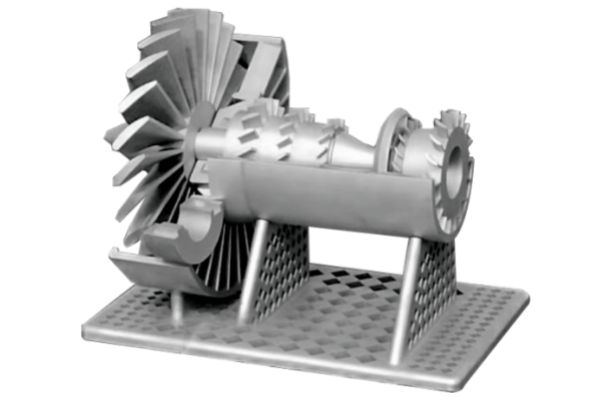
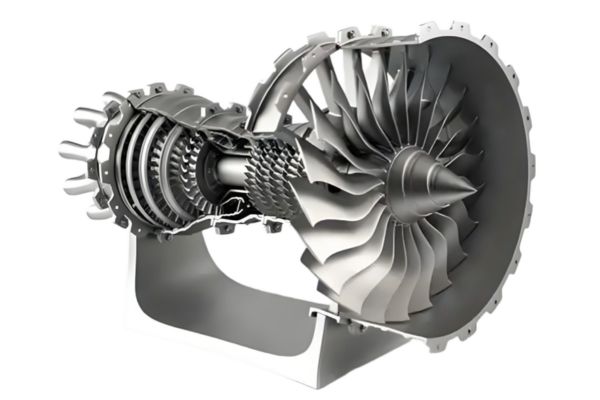
One of the fastest-growing application areas is turbine and engine manufacturing.
Metal 3D printing allows:
- High-temperature alloy usage
- Integrated cooling structures
- Fewer assembled parts
- Improved thermal efficiency
This is critical for next-generation aircraft engines.
5. Certification and Industrial Scaling
A key trend is the growing focus on certification and repeatability.
Aerospace manufacturers are now prioritizing:
- Process validation
- Material traceability
- Repeatable production quality
- Standardized AM workflows
This is enabling metal AM to move from experimental use to industrial-scale production.
Industry Outlook
The aerospace sector will continue to be a major driver of metal additive manufacturing growth due to:
- Strong demand for lightweight structures
- High-performance material requirements
- Long product lifecycles
- Increasing supply chain localization
Metal 3D printing is becoming a strategic manufacturing tool rather than a niche technology.
Work with Techin Limited
Techin Limited supports aerospace-grade metal additive manufacturing with:
- Industrial SLM equipment
- Aerospace metal powders
- Process optimization support
- Post-processing solutions
📩 Contact us to explore aerospace-grade metal 3D printing solutions for your applications.