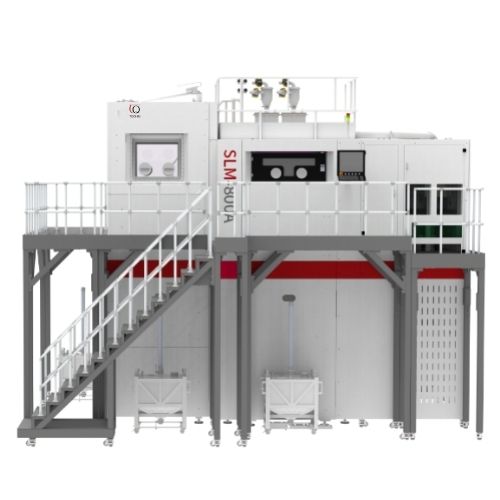
What Is SLM Metal 3D Printing?
Selective Laser Melting (SLM) is one of the most important technologies in modern metal additive manufacturing. It enables manufacturers to produce complex, high-performance metal parts directly from digital models, without the tooling required by traditional manufacturing methods.
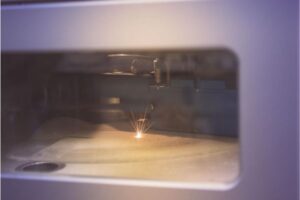
What Is SLM?
SLM is a powder-bed fusion process. A thin layer of metal powder is spread across a build platform, and a high-powered laser selectively melts the powder according to the CAD design. The process repeats layer by layer until the part is complete.
How SLM Works
- Prepare the digital modelA CAD model is sliced into thin layers and support structures are added if needed.
- Spread the powder layerA recoater deposits a uniform layer of metal powder.
- Laser meltingThe laser scans the selected areas and fully melts the powder.
- Lower the build platformThe platform moves down by one layer thickness.
- Repeat the processNew powder is spread and the laser continues melting layer by layer.
- Remove and post-processThe finished part is removed, supports are detached, and finishing operations are performed.
Common Materials Used in SLM
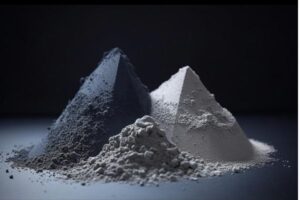
- Stainless steel: good corrosion resistance and general-purpose performance.
- Titanium alloys: high strength-to-weight ratio for aerospace and medical applications.
- Cobalt-chrome: excellent wear and heat resistance.
- Nickel-based superalloys (e.g., Inconel): suitable for high-temperature environments.
- Aluminum alloys: lightweight and useful for automotive and aerospace parts.
Key advantage
Why SLM Is Valuable
Unlike many conventional processes, SLM can create internal channels, lattice structures, and highly complex geometries that are difficult or impossible to machine. It is especially valuable for lightweighting, customization, and low-to-medium volume production.
Typical Applications
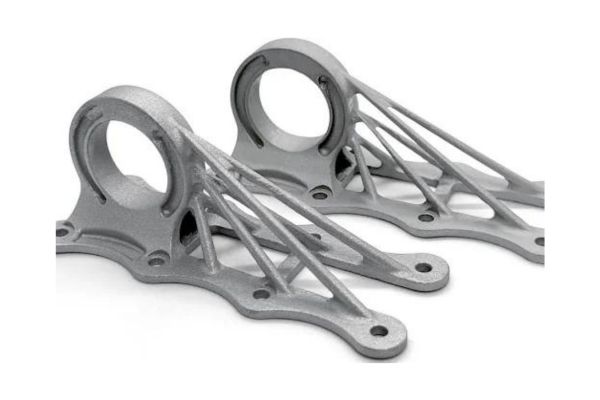
Aerospace
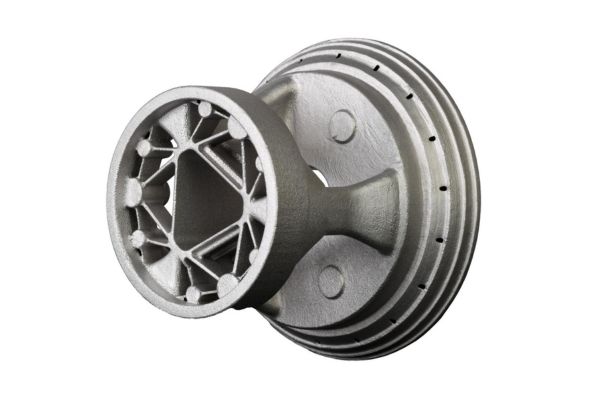
Lightweight brackets, fuel system components, and complex assemblies.
Medical
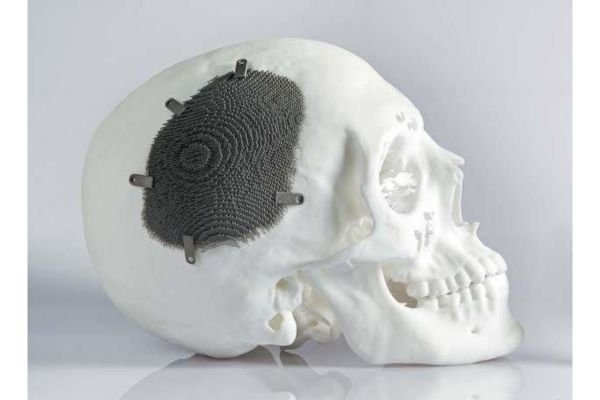
Patient-specific implants, surgical tools, and orthopedic devices.
Automotive
Lightweight structural parts, manifolds, and prototype components.
Tooling
Conformal cooling inserts, fixtures, and production tooling.
Advantages of SLM
- Design freedom: Create geometries that are difficult or impossible with machining or casting.
- Material efficiency: Only the required material is melted, reducing waste compared with subtractive manufacturing.
- High-performance parts: Produces dense metal components with excellent mechanical properties when processed correctly.
- Rapid iteration: Design changes can be implemented quickly without new tooling.
Challenges to Consider
- Surface roughness often requires finishing.
- Support structures may be needed for overhangs.
- Build speed is slower than mass-production processes such as casting.
- Process parameters must be carefully controlled to ensure consistent quality.
SLM vs. Traditional Manufacturing
| Feature | SLM | Traditional Methods |
|---|---|---|
| Complex internal channels | Excellent | Often difficult |
| Tooling requirements | Minimal | Usually significant |
| Material waste | Relatively low | Can be high (machining) |
| Production speed | Lower for large volumes | Higher for mass production |
| Customization | Excellent | Limited |
Why SLM Matters
SLM metal 3D printing is transforming the way manufacturers produce complex metal components. By building parts layer by layer from metal powder, it offers exceptional design freedom, material efficiency, and the ability to create high-performance parts for aerospace, medical, automotive, and industrial applications.
For companies evaluating additive manufacturing, understanding the fundamentals of SLM is the first step toward identifying where the technology can reduce weight, simplify assemblies, shorten development cycles, and enable designs that were previously impractical to manufacture.
Ready to Explore Metal 3D Printing with Techin Limited?
If you’re interested in implementing SLM metal 3D printing for your projects, our team at Techin Limited is here to help. From selecting the right materials to optimizing build orientation and post-processing, we provide expert guidance and full-service support.
📩 Contact us today to discuss your metal additive manufacturing needs and get a personalized solution.