Chamber Inertization in Metal 3D Printing: How Fast Can You Reach Sub-100 ppm Oxygen?
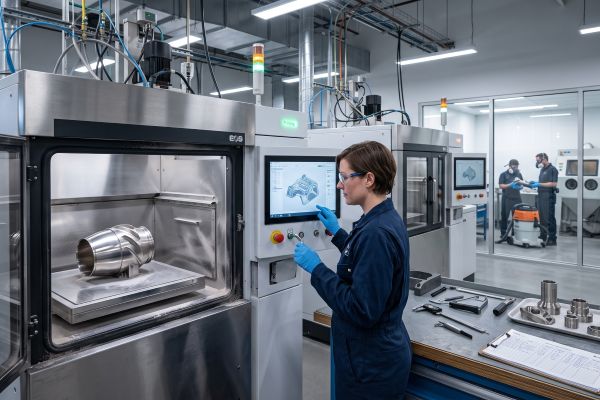
A modern production-grade Metal 3D Printer typically reaches sub-100 ppm oxygen levels within 10 to 30 minutes, depending on build volume displacement, vacuum assist capabilities, and inert gas fluid dynamics. While standard dynamic flow systems often require 45 to 60 minutes to displace ambient air, advanced platforms featuring vacuum-assisted purging or CFD-guided laminar gas flow achieve sub-50 ppm purity in under 15 minutes. High-performance reactive materials such as Ti-6Al-4V, AlSi10Mg, and pure copper require this oxygen-depleted environment before exposure begins. Rushing the process risks trapped oxygen pockets that degrade the powder bed, reducing the operational efficiency of Metal 3D Printing lines.
Balancing rapid gas displacement with overall argon consumption remains a primary engineering challenge. If an operator waits an hour for chamber inertization, machine productivity drops drastically. Conversely, starting laser melting prematurely introduces interstitial contamination into the consolidated melt pool. Understanding the mechanical, fluid, and metallurgical factors behind chamber displacement allows manufacturing facilities to minimize non-productive cycle times while maintaining strict metallurgical quality.
Why Sub-100 ppm Oxygen Matters in Industrial Production
Atmospheric control forms the foundation of metallurgical repeatability in laser powder bed fusion. Uncontrolled oxygen pickup permanently compromises metallic lattice structures across different alloy systems.
| Material Alloy Family | Maximum Allowable Oxygen | Metallurgical Defect from Excess Oxygen |
| Titanium (Ti-6Al-4V ELI) | < 100 ppm (target < 20 ppm) | Interstitial embrittlement, drop in elongation at break |
| Pure Copper (OFHC) | < 50 ppm (target < 10 ppm) | Cuprous oxide precipitation, electrical conductivity loss |
| Aluminum (AlSi10Mg) | < 200 ppm | Persistent oxide skins, severe lack-of-fusion voids |
| Nickel Superalloys (Inconel 718) | < 300 ppm | Dross accumulation, laser beam scattering, slag inclusions |
Titanium acts as a chemical getter at temperatures above 400°C, absorbing free oxygen directly into its interstitial lattice sites. This intake hardens the alloy prematurely, destroying fatigue life and fracture toughness.
For aluminum alloys, residual oxygen creates resilient aluminum oxide films over molten powder tracks. These surface films interrupt wetting kinetics, causing balling defects and internal delamination.
In pure copper applications, residual oxygen forms cuprous oxide inclusions along grain boundaries. These non-conductive precipitates degrade thermal dissipation and lower electrical conductivity below commercial acceptance limits. Maintaining tight atmospheric boundaries is therefore a baseline requirement for high-density Metal 3D Printing operations.
Inertization Methods Used in a Production Metal 3D Printer
Manufacturing platforms utilize two distinct thermodynamic approaches to displace ambient air from the internal process volume.
Vacuum-Purge Method
The vacuum-assisted method evacuates ambient air before introducing high-purity argon or nitrogen. A mechanical roughing pump pulls the chamber down to a rough vacuum level, typically between 0.1 mbar and 10 mbar. Once the internal pressure sensor verifies target vacuum levels, automated manifold valves backfill the interior with high-purity inert gas.
- Engineering Advantages: Evacuation removes air pockets trapped inside tight crevices, elevator cavities, and powder hoppers. It achieves sub-50 ppm levels with minimal gas waste.
- Structural Limitations: The Metal 3D Printer chamber must feature thick, reinforced steel walls to resist atmospheric pressure differentials without buckling, increasing machinery weight and initial capital cost.
Dynamic Flow Purge Method
Dynamic positive-pressure purging avoids mechanical vacuum cycles entirely. Instead, heavy inert gas enters through an upper laminar diffuser while lower exhaust manifolds discharge the displaced, lighter air. Because argon is heavier than ambient air, it acts as a falling gas piston.
- Engineering Advantages: The mechanical enclosure does not require pressure-vessel reinforcement, simplifying access door seals and reducing the physical footprint of the equipment.
- Fluid Limitations: Achieving sub-100 ppm oxygen relies strictly on maintaining stable laminar flow. Any internal velocity spikes induce convective turbulence, blending pure shielding gas with ambient air and increasing overall gas consumption.
Key Design Features of Fast-Inerting Metal 3D Printers
The internal architecture of modern Metal 3D Printers determines how rapidly gas displacement stabilizes without generating trapped pockets of contamination.
Dead-Zone Elimination via Computational Fluid Dynamics
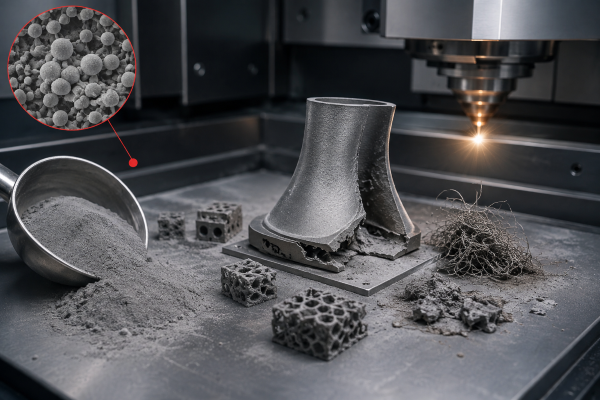
Standard rectangular enclosures naturally trap ambient air within sharp corners, structural door hinges, and recessed optical frames. Advanced Metal 3D Printers utilize computational fluid dynamics (CFD) modeling to contour internal walls. Curved deflector plates steer incoming argon smoothly toward the exhaust port. Eliminating internal dead zones prevents pockets of trapped air from slowly leaching back into the main process area during lengthy scanning sequences.
Sensor Technology and Multi-Point Monitoring
Oxygen sensor architecture determines whether reported measurements reflect true chamber conditions.
- Zirconium Oxide Sensors: These solid-state ceramic sensors deliver response times under 2 seconds. They operate at elevated internal temperatures and provide precise tracking down to single-digit ppm levels.
- Electrochemical Cells: While cost-effective, electrochemical sensors suffer from moisture-dependent drift and display slower response curves during rapid gas transitions.
- Multi-Point Sensor Arrays: Relying on a single sensor at the exhaust port often produces false readings. Top-tier systems integrate dual or triple monitoring locations, tracking gas purity directly at the powder bed plane, the optical protective glass, and the return filtration duct.
Strategies to Accelerate Metal 3D Printing Chamber Preparation
Operational efficiency depends on combining optimized machine design with disciplined pre-build handling procedures to cut non-productive idle hours.
Chamber Displacement Blocks
Empty build volume directly multiplies the volume of inert gas required for displacement. Modern Metal 3D Printing workflows incorporate modular volume displacement blocks. Operators place sealed, non-outgassing aluminum blocks into unused sections of large build platforms. Displacing 30% of interior dead volume reduces purge cycle durations by a corresponding margin, allowing the Metal 3D Printer to begin laser exposure far sooner.
Eliminating Powder Moisture and Residual Gas
Loose metal powder acts as a moisture sponge. Even virgin or sieved powders retain absorbed atmospheric water vapor on individual particle surfaces.
When cold argon gas enters the chamber, humidity outgasses slowly, releasing oxygen and hydrogen molecules into the process atmosphere. Vacuum pre-heating cycles or dedicated external powder drying units strip surface moisture before the powder enters the build chamber, accelerating sub-100 ppm oxygen stabilization in industrial Metal 3D Printing.
Safe Environmental Preparation for Your Metal 3D Printer
Achieving repeatable metallurgical density requires standardized operating protocols alongside automated hardware controls:
- Inspect door seals and clean fluoropolymer gaskets thoroughly to prevent particulate matter from causing micro-leaks.
- Initiate an automated pressure-decay test to confirm that the Metal 3D Printer enclosure achieves airtight isolation before opening the gas supply.
- Regulate gas flow velocity between 0.8 m/s and 1.2 m/s during initial purging to prevent turbulent vortex mixing.
- Confirm that all monitoring points on the Metal 3D Printers read stably below 50 ppm for at least three consecutive minutes before enabling laser emission.
Achieving fast chamber inertization requires balancing CFD-optimized chamber geometry, precise multi-sensor verification, and disciplined powder preparation. Optimizing these systems cuts prep cycles from hours down to minutes, keeping your production Metal 3D Printer operating at maximum efficiency.
Contact our engineering team to evaluate fast-purging systems and optimize your production facility workflows.