Can Some 3D Printers Print Metal?
Some 3D Printers Can Print Metal
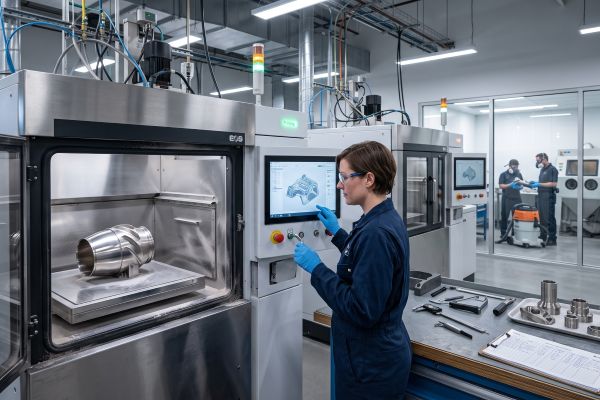
When people think about 3D printing, plastic prototypes and small models are usually the first things that come to mind. However, 3D printing has developed far beyond plastic materials. Today, some industrial 3D printers are capable of producing strong and functional metal parts.
These machines are known as Metal 3D Printers. Unlike desktop 3D printers that use materials such as PLA or ABS, Metal 3D Printers process metal powders and use advanced manufacturing methods to build components layer by layer.
Among different metal additive manufacturing technologies, SLM technology is one of the most widely used solutions for producing high-performance metal parts. It is commonly used in industries where part strength, accuracy, and design flexibility are important.
How Do Metal 3D Printers Create Metal Parts?
A Metal 3D Printer creates parts by adding material layer by layer instead of removing material through cutting or machining. This manufacturing approach gives engineers more freedom when designing complex components.
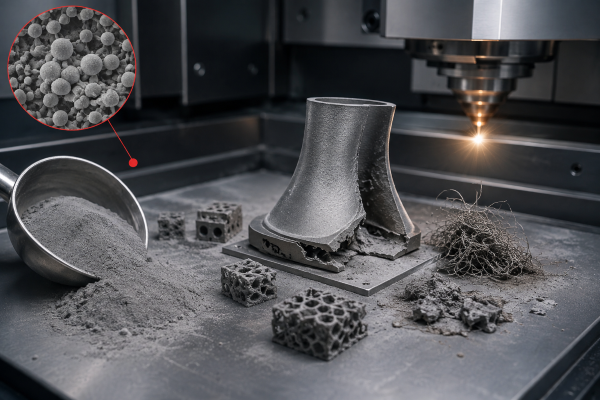
The process usually starts with fine metal powder. Materials such as titanium alloy, aluminum alloy, and stainless steel are prepared in powder form and placed inside the printer.
During printing, a recoater spreads a thin layer of powder across the build platform. A high-power laser then melts selected areas of the powder according to the digital model. After one layer is completed, the machine repeats the process with a new powder layer until the entire component is finished.
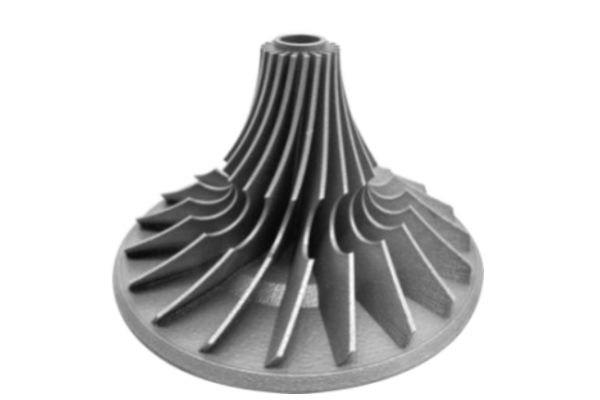
This process allows manufacturers to produce structures that are difficult to achieve with traditional methods. For example, internal channels, lightweight lattice structures, and complex geometries can often be produced more efficiently with metal additive manufacturing.
After printing, metal parts usually require additional processes such as heat treatment, support removal, and surface finishing. These steps improve mechanical properties and ensure the final component meets application requirements.
Common Technologies Used for Metal 3D Printing
Several technologies are available for metal 3D printing, but they work in different ways and serve different production needs.
Selective Laser Melting (SLM) is one of the most popular technologies for industrial metal printing. It uses a laser to fully melt metal powder and create dense metal components. Due to its high accuracy and excellent mechanical performance, SLM is widely used for aerospace parts, medical components, and precision industrial applications.
Direct Metal Laser Sintering (DMLS) is another laser-based metal printing technology. Similar to SLM, it uses a laser system to process metal powder layer by layer. DMLS is often used for manufacturing complex metal parts with reduced material waste.
Binder Jetting uses a different approach by applying a binding agent to metal powder. The printed parts then require additional sintering processes to achieve the required strength and density.
Among these technologies, SLM technology remains a key solution for applications that require strong, reliable, and high-quality metal components.
Materials and Applications of Metal 3D Printing
Metal 3D Printers support a variety of materials depending on performance requirements.
Titanium alloys are widely used in aerospace and medical applications because they provide high strength while maintaining low weight. Aluminum alloys are popular for lightweight components in aerospace and automotive industries. Stainless steel is commonly selected for industrial parts because of its durability and corrosion resistance. Nickel alloys are suitable for high-temperature environments, including aerospace and energy applications.
The applications of metal 3D printing continue to expand. In aerospace manufacturing, companies use Metal 3D Printers to create lightweight structures and complex components that help improve performance. In the medical field, the technology supports customized implants and patient-specific solutions. Automotive manufacturers also use metal additive manufacturing for prototypes, functional parts, and low-volume production.
Compared with traditional manufacturing methods,
Conclusion
Some 3D printers can print metal, but these machines are different from standard desktop 3D printers. A Metal 3D Printer use as industries continue to demand more complex and customized. If you are looking for a reliable Metal 3D Printer solution, please contact us for professional support.