Metal Additive Manufacturing Technologies: Industry Development and Technical Guide (Part 1)
Introduction
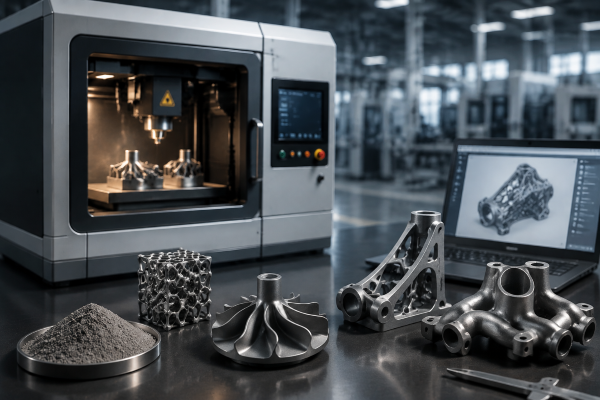
Additive manufacturing (AM) is an advanced manufacturing method that builds parts layer by layer. It enables complex geometries that are difficult or impossible to produce with conventional machining. The process offers high dimensional accuracy and shorter design-to-production cycles.
Today, additive manufacturing includes dozens of different technologies. Each process has unique strengths in materials, precision, build size, complexity, and production speed. Manufacturers select different technologies according to application requirements.
As laser systems become more efficient and Design for Additive Manufacturing (DfAM) continues to mature, additive manufacturing will expand into more industrial applications.
The global additive manufacturing market is expected to approach RMB 600 billion by 2030. The United States, China, and Germany remain the largest markets. China’s market alone is expected to exceed RMB 50 billion within the next few years, while its overall penetration rate still has significant room for growth.
Many industries already recognize the value of additive manufacturing. Aerospace, healthcare, and consumer products have become major application sectors. Energy equipment, industrial tooling, and heavy manufacturing are expected to create additional growth opportunities. Aerospace demand is also expected to remain strong in the coming years.
The upstream supply chain includes high-value components such as lasers and galvanometer scanners. These products require advanced manufacturing capabilities, while domestic production continues to improve. Material suppliers are expanding both production capacity and material portfolios. Equipment manufacturers continue to optimize printing processes and explore new technologies. Meanwhile, printing service providers have maintained rapid revenue growth during the past decade.
The global additive manufacturing industry remains highly competitive. Leading companies continue to expand through acquisitions and strategic partnerships. Equipment manufacturers are evolving into complete solution providers by integrating software, materials, and services. At the same time, large industrial companies are investing directly in additive manufacturing to strengthen their production capabilities.
International listed companies experienced significant valuation declines during 2022 because of economic uncertainty, component shortages, and weaker demand. Market performance improved noticeably in 2023. In contrast, many listed Chinese additive manufacturing companies have maintained strong revenue growth and increasing market value during recent years.
1. What Is Additive Manufacturing?
Additive manufacturing is a rapid manufacturing technology that creates physical parts directly from digital models. The process builds objects layer by layer until the final component is completed.
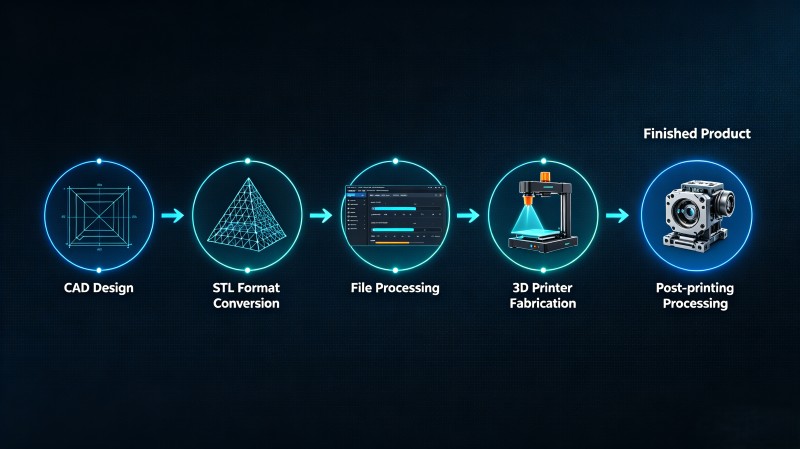
Traditional manufacturing usually removes material from a solid workpiece. Additive manufacturing follows the opposite approach. It adds material only where it is required to create the final part.
Compared with conventional manufacturing, additive manufacturing offers several important advantages.
From a material perspective, additive manufacturing requires specialized materials. These materials usually cost more than conventional materials. Material choices are also more limited. However, material utilization is significantly higher because waste is greatly reduced.
From a manufacturing perspective, additive manufacturing simplifies the production of highly complex components. Many intricate structures can be produced as a single integrated part with excellent dimensional accuracy.
From a product development perspective, additive manufacturing shortens design verification cycles. Engineers can evaluate prototypes more quickly and reduce development time.
From an economic perspective, additive manufacturing first achieved success in industries with low price sensitivity, including aerospace and medical devices. As technology continues to mature, it is gradually expanding into automotive, energy, industrial equipment, and many other sectors.
| Comparison Item | Conventional Manufacturing | Additive Manufacturing (Metal 3D Printing) |
|---|---|---|
| Raw Materials | Material selection depends on product requirements. Material costs are generally lower, but material utilization is typically low. | Requires application-specific feedstock (such as metal powders), resulting in higher material costs. However, material utilization is significantly higher. |
| Manufacturing Process | Parts are produced through machining, cutting, welding, and other subtractive or joining processes. Complex components are typically assembled from multiple parts. | Enables one-piece fabrication of complex geometries with high dimensional accuracy. Industrial metal 3D printing systems can achieve layer thicknesses of 10–20 μm. |
| Manufacturing Cost | Material and equipment costs are generally lower. However, machining complex parts often leads to higher production costs and material waste. | Requires specialized materials, resulting in higher initial costs. However, high material utilization and reduced post-processing can provide cost advantages for high-value applications. |
| Manufacturing Equipment | Equipment is highly versatile and can often be used across multiple manufacturing applications. | Equipment configurations are typically customized according to specific application requirements and production needs. |
| Production Cycle & Efficiency | Production cycles are generally longer, with lower overall manufacturing efficiency. | Shortens design verification and product development cycles while improving production efficiency. |
| Part Size | Suitable for manufacturing components across nearly all industrial size ranges. | Currently focused on high-end manufacturing of small to medium-sized precision components, typically ranging from micro-scale to several hundred millimeters. Not suitable for producing very large parts directly. |
| Application Areas | Mature and widely adopted across almost all manufacturing industries. | Currently applied in fewer industries than conventional manufacturing, but offers significant growth potential across aerospace, medical, energy, automotive, tooling, and other advanced manufacturing sectors. |
Comparison Between Additive Manufacturing and Conventional Manufacturing
2. Industry Development
The development of additive manufacturing has progressed through several distinct stages.
During the 1960s and 1970s, additive manufacturing remained in its research phase. Commercial demand was almost nonexistent, and research funding was very limited. Early studies demonstrated several core technologies. These included photopolymerization in the late 1960s, powder fusion in 1972, and laminated object manufacturing in 1979.
The 1980s and early 1990s marked the beginning of rapid technological innovation. Several important additive manufacturing technologies were successfully commercialized during this period.
Researchers at the Massachusetts Institute of Technology introduced the concept of 3D printing in 1989. Laser melting technologies also emerged during the 1990s. At the same time, stereolithography (SLA), fused deposition modeling (FDM), and selective laser sintering (SLS) entered commercial markets.
Research publications and patent filings increased rapidly. However, high equipment costs, limited materials, restricted build sizes, and insufficient precision slowed industrial adoption. Most applications focused on prototypes and concept models rather than end-use components.
The establishment of 3D Systems in 1986 marked the beginning of the commercial 3D printing industry.
During the 1990s and early 2000s, additive manufacturing entered a period of sustained growth. Existing technologies continued to improve, while new processes gradually reached commercialization.
Software designed specifically for additive manufacturing also became available. Dedicated file formats and professional software platforms improved production efficiency. One important milestone was the introduction of Materialise Magics, which became one of the industry’s most widely used software solutions.
Equipment improvements and process optimization significantly enhanced part quality. As a result, additive manufacturing gradually expanded from prototyping into tooling and end-use production.
After 2009, many core patents in Europe and the United States began to expire. Most of these patents expired between 2009 and 2015. This change accelerated the development of China’s additive manufacturing industry and encouraged the rapid growth of domestic equipment manufacturers.
Between 2011 and 2020, industrial adoption accelerated worldwide. The global market maintained strong growth throughout the decade.
Leading companies, including 3D Systems, Stratasys, and BLT, became publicly listed. Large industrial companies such as GE, Canon, and Toshiba also entered the additive manufacturing market. Their investments expanded industrial applications across aerospace, healthcare, automotive, and many other sectors.
3. Future Technology Trends
As additive manufacturing moves toward large-scale industrial production, the technology continues to improve. Two trends deserve particular attention. The first is higher laser efficiency. The second is Design for Additive Manufacturing (DfAM). Both trends will improve productivity and expand industrial applications.
3.1 Higher Laser Efficiency Improves Productivity
Laser performance directly affects printing speed and production cost. Improving laser efficiency has become a major research focus across the industry.
Many companies are exploring new approaches to increase productivity. Some focus on higher laser power, while others optimize energy distribution or scanning strategies.
VulcanForms developed a 100 kW laser powder bed fusion (PBF) system. The company integrated this technology into its proprietary digital manufacturing platform. The solution targets high-volume industrial production.
Seurat Technologies introduced a different approach. Its laser PBF system uses an optically addressable light valve to create what the company calls Area Printing. Instead of scanning a single laser spot across the powder bed, the system exposes a larger area simultaneously. According to the company, this process can be up to ten times faster than conventional laser PBF.
Researchers are also improving heat distribution during laser processing. More uniform thermal control reduces overheating and improves melt pool stability. Better thermal management can increase build speed, improve material quality, and reduce spatter and smoke.
Another emerging technology comes from SunMetalon. The company is developing a process that heats metal layers instead of individual points or scan lines. This approach could further increase the production speed of metal additive manufacturing.
As these technologies mature, manufacturers are expected to achieve higher throughput without sacrificing part quality.
3.2 DfAM Improves Product Performance
Design for Additive Manufacturing (DfAM) is becoming one of the most important capabilities in modern product development.
Traditional design methods often follow the limitations of machining or casting. DfAM takes a different approach. Engineers design products specifically for additive manufacturing from the beginning of the development process.
A DfAM workflow considers many factors simultaneously. These include structural design, printing processes, material behavior, part qualification, production capacity, and post-processing requirements.
This integrated approach helps manufacturers fully utilize the advantages of additive manufacturing.
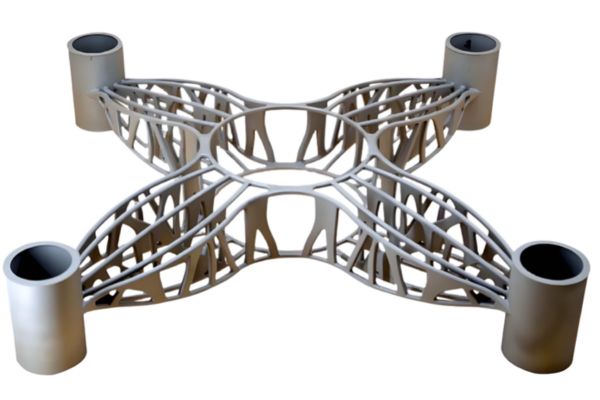
DfAM can improve every stage of production. Better designs reduce support structures, shorten printing time, simplify post-processing, and improve manufacturing efficiency.
DfAM also enables lighter and stronger products. Engineers can optimize internal structures, reduce material usage, and improve mechanical performance. At the same time, manufacturers can lower assembly complexity by combining multiple components into a single printed part.
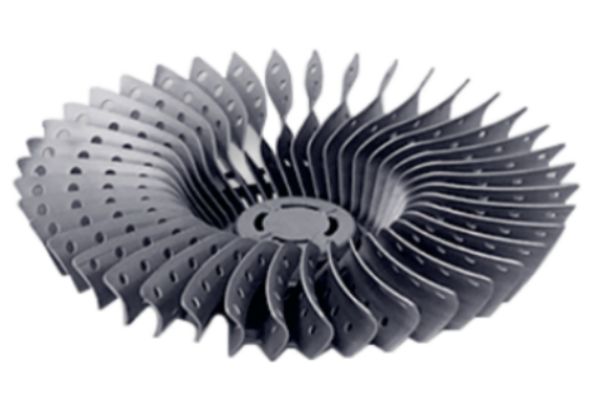
Several companies already use DfAM to develop high-performance thermal management systems.
For example, Conflux Technology designs advanced heat exchangers with highly complex internal flow channels. These geometries cannot be manufactured using traditional methods.
GKN Additive also applies DfAM to produce lightweight heat exchangers for demanding industrial applications. The optimized designs improve heat transfer while reducing weight and material consumption.
As DfAM software continues to evolve, engineers will gain greater design freedom. Future products will become lighter, stronger, and more efficient while requiring fewer manufacturing steps.
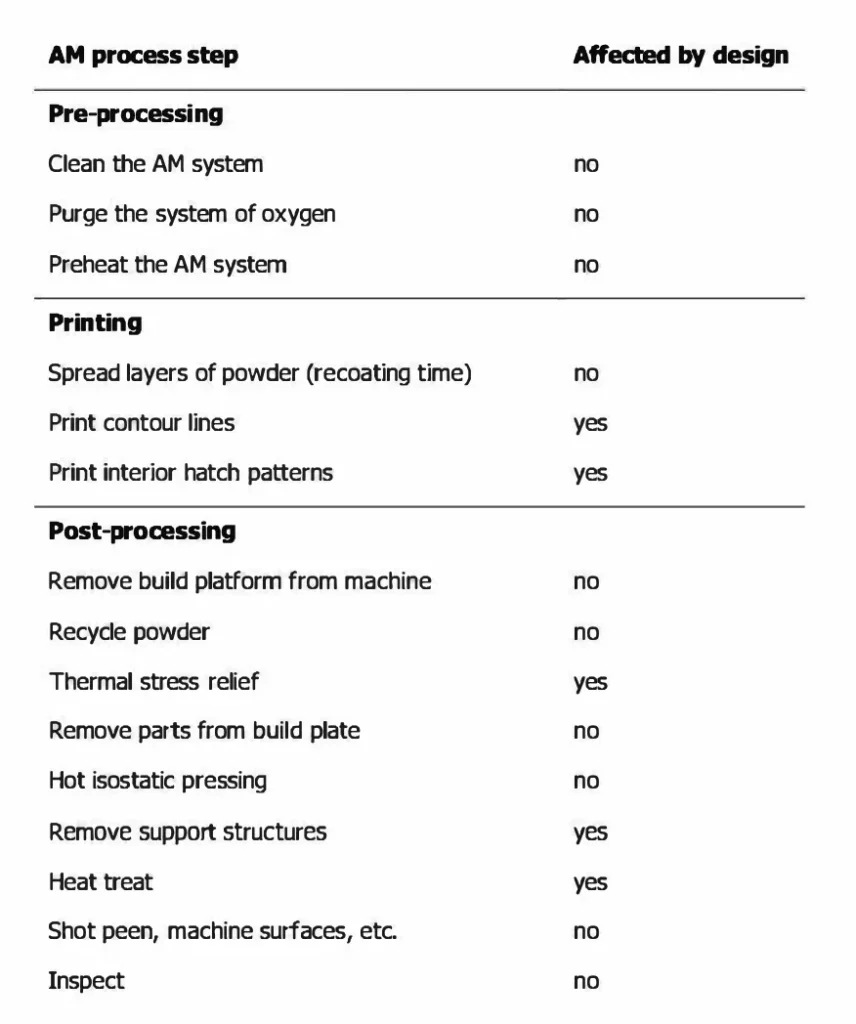
Cost Impact of DfAM Across the Additive Manufacturing Workflow
4. Major Additive Manufacturing Technologies
Additive manufacturing includes two primary categories:
- Metal additive manufacturing
- Polymer and non-metal additive manufacturing
Each category contains several different process families. Every technology offers unique advantages in material compatibility, accuracy, build size, production speed, and cost.
4.1 Metal Additive Manufacturing
Metal additive manufacturing can be divided into two major groups:
- Fusion-based processes
- Solid-state processes
Fusion-based technologies melt metal during printing. Solid-state technologies join material without fully melting it.
Solid-state processes include ultrasonic welding, friction stir welding, cold spray, and several sheet-based manufacturing methods. These technologies are important for specific applications but represent a smaller portion of today’s industrial market.
Fusion-based processes dominate commercial metal additive manufacturing. The two most important technologies are Powder Bed Fusion (PBF) and Directed Energy Deposition (DED).
According to AMPOWER, Powder Bed Fusion accounted for approximately 83.8% of global metal additive manufacturing revenue in 2021. Directed Energy Deposition represented approximately 9.1% of the market.
Powder Bed Fusion (PBF)
Powder Bed Fusion is one of the most widely used metal additive manufacturing technologies.
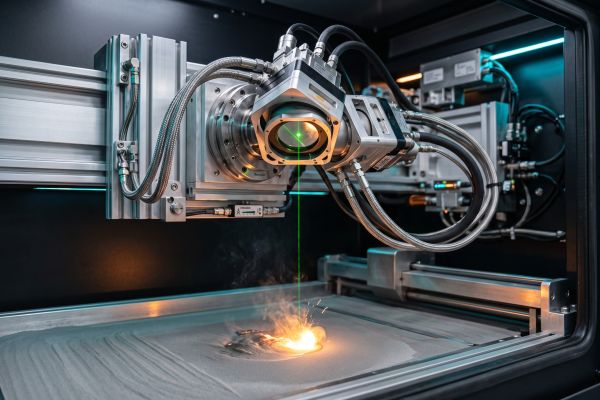
The process spreads a thin layer of metal powder across a build platform. A high-energy beam selectively melts specific areas according to the digital model. The machine repeats this process layer by layer until the part is complete.
PBF mainly uses two energy sources:
- Laser
- Electron beam
These energy sources create different manufacturing processes.
Selective Laser Sintering (SLS)
Selective Laser Sintering uses a laser to fuse powdered materials.
For metal applications, the laser heats powder particles until they bond together. However, the powder is not always completely melted.
SLS is also widely used for polymer materials. Today, polymer SLS remains one of the most mature non-metal additive manufacturing technologies.
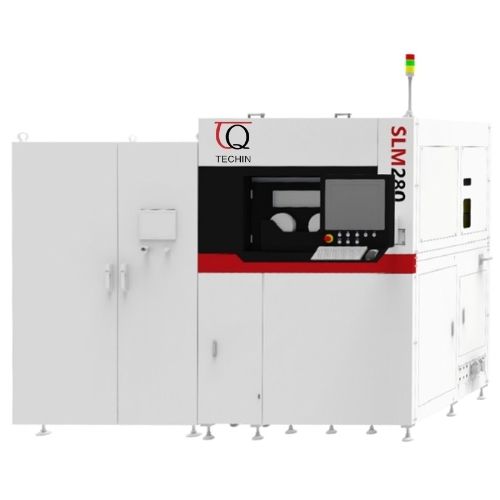
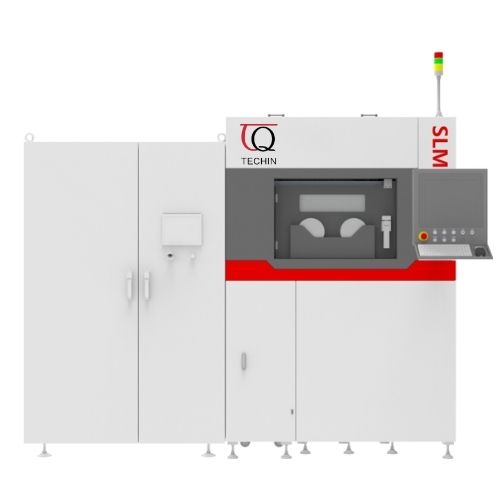
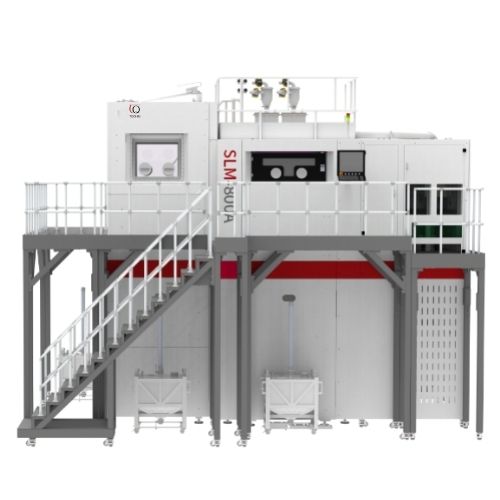
Selective Laser Melting (SLM)
Selective Laser Melting also uses a laser as its energy source. However, SLM completely melts the metal powder during printing.
Because the molten metal reacts easily with oxygen, SLM operates inside a chamber filled with inert gas. This controlled environment prevents oxidation during the printing process.
Complete melting produces dense metal components with excellent mechanical properties.
Compared with SLS, SLM offers several important advantages.
- Higher material density
- Better mechanical strength
- Higher dimensional accuracy
- Improved surface quality
These advantages make SLM one of the preferred technologies for high-performance metal components.
However, SLM also presents several challenges.
The process requires complex parameter optimization. Printing speed remains relatively slow. Parts with extensive support structures require longer production times and higher manufacturing costs.
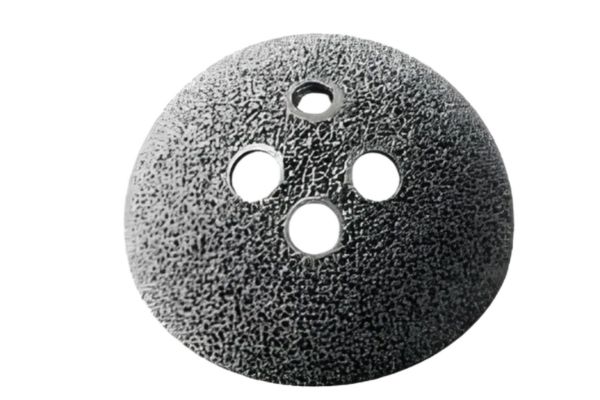
Despite these limitations, SLM is widely used for extremely complex aerospace components. Typical examples include rocket engine cooling channels, injector heads, fuel nozzles, and throttle valves.
Note: SLS can process both metal and polymer materials, while SLM is primarily used for fully dense metal components.
Electron Beam Melting (EBM)
Electron Beam Melting uses an electron beam as its energy source. Compared with laser-based PBF, EBM generally offers lower precision but higher deposition speed. SLM deposition rates are usually around 0.1 kg/h, while EBM can achieve several times that rate.
EBM also has clear cost advantages in many production steps. These advantages are especially noticeable in equipment operation, heat treatment, and support removal. In addition, EBM usually does not require post-processing to relieve residual stress. Its support structures can also be removed more easily, which lowers support removal costs.
Directed Energy Deposition (DED)
DED generally provides higher printing efficiency than PBF, but its precision is lower. DED processes can be classified according to material form. The material may be delivered as powder or wire. Common energy sources include lasers, electron beams, and electric arcs.
Laser Powder Deposition (LENS/LMD/LSF)
Laser powder deposition is one of the most widely researched and applied DED technologies. It can produce gradient materials and repair complex curved surfaces. The technology is increasingly used for repairing large components.
Electron Beam Wire Deposition (EBDM/EBAM/EBF)
Electron beam wire deposition offers a major advantage in deposition rate. EBAM can reach deposition rates of about 18.2 kg/h. This rate is roughly one order of magnitude higher than laser-based DED technologies and more than two orders of magnitude higher than PBF technologies.
Wire Arc Additive Manufacturing (WAAM)
WAAM focuses on large-size and high-efficiency manufacturing. Its deposition rate can reach tens of kilograms per hour, which significantly reduces manufacturing costs. Because WAAM does not require protective gas chambers or vacuum chambers, workpiece size is less limited by equipment space. This feature also reduces equipment investment costs.
WAAM can process a wide range of materials, including materials with high laser reflectivity such as aluminum alloys and copper alloys. Because WAAM is closely related to welding processes, defects such as cracks, porosity, and spatter may occur. The surface precision of WAAM parts is also relatively low, so post-processing is usually required.
Typical WAAM applications include near-net-shape component manufacturing, printing specific structures onto existing components, producing topology-optimized structures, and repairing high-value components.
Post-processing in Metal Additive Manufacturing
Metal additive manufacturing processes that involve high energy input usually require post-processing. Common post-processing operations include powder removal, support removal, build plate separation, machining, cleaning, polishing or surface enhancement, and welding or joining operations.
Before separating a part from the build plate, stress relief is usually required. This step helps prevent residual stress from causing part deformation. Different additive manufacturing processes have different requirements for support removal, stress relief, and heat treatment.
Non-metal Additive Manufacturing
Vat Photopolymerization
Vat photopolymerization is a resin-based 3D printing process. In this process, light is directed to specific areas of liquid resin to cure and solidify the material. After one layer is cured, the build platform moves by a small distance, usually between 0.01 mm and 0.05 mm. The next layer is then cured and bonded to the previous layer.
Vat photopolymerization can be divided according to the light source. Major technologies include SLA, DLP, and LCD.
Stereolithography (SLA)
SLA uses a solid-state laser to cure liquid resin. It is one of the most mature and widely used 3D printing technologies. SLA provides high dimensional accuracy, good surface quality, and high system resolution. It is suitable for producing complex models and components.
Its disadvantages include a tendency for parts to warp or deform, relatively high equipment operation and maintenance costs, and limited long-term storage stability of resin materials.
Digital Light Processing (DLP)
DLP uses a digital projector instead of a laser. It projects an image onto an entire resin layer at the same time. Each layer requires approximately the same exposure time, which makes DLP more efficient than the point-by-point laser scanning method used in SLA. DLP is suitable for producing larger parts and higher production volumes.
Liquid Crystal Display (LCD)
LCD 3D printing uses an LCD screen as the light source. It uses an array of many small emitters instead of a single laser or projector light source. Because LCD units are relatively inexpensive, this technology has become a common choice for low-cost desktop resin printers.
Typical LCD applications include injection-mold-like polymer prototypes, end-use parts, jewelry casting, dental applications, and consumer products.
Material Extrusion
Fused Deposition Modeling (FDM), also called Fused Filament Fabrication (FFF), is a typical material extrusion process. In this process, filament is fed from a spool into a heated print nozzle. The filament softens and is deposited layer by layer to form a solid part.
Material extrusion is one of the lower-cost 3D printing methods. It does not require expensive components such as lasers. The process is clean, simple, easy to operate, and produces little waste. It can be used in offices or home environments because it has relatively low environmental requirements and simple maintenance needs.
However, material extrusion generally provides lower dimensional accuracy and poorer surface finish than SLA.
Other Additive Manufacturing Technologies
Other additive manufacturing technologies include material jetting, binder jetting, and sheet lamination. These technologies can be applied to both metal and non-metal materials.
Binder Jetting
In binder jetting, a thin layer of powder is spread across the build platform. A printhead with inkjet nozzles selectively deposits binder droplets to bond powder particles together. After one layer is completed, the build platform lowers and a new powder layer is applied. This process is repeated until the entire part is formed.
A distinctive feature of binder jetting is that the printing process does not involve heat. Binder jetting offers high speed and productivity. However, polymer binder jetting has limited material choices, and the mechanical properties of printed parts are generally lower.
Sheet Lamination
Sheet lamination builds 3D objects by stacking and bonding thin sheets of material. The final shape is then formed by mechanical cutting or laser cutting. Material layers may be bonded using heat, sound, or other methods, depending on the material type.
Common sheet lamination processes include Laminated Object Manufacturing (LOM) and Ultrasonic Consolidation (UC). Materials may include paper, polymers, and sheet metal.
The advantages of sheet lamination include fast production and the ability to combine different materials. Its disadvantages include relatively low accuracy, material waste, and the need for post-processing for some parts. The technology also has limitations in tensile strength, elasticity, and hollow structure fabrication.
Material Jetting
Material jetting deposits droplets of material onto the build surface and then cures or hardens each layer using ultraviolet light. This process is repeated layer by layer until the object is completed.
Because the material is deposited as droplets, the available materials are mainly photopolymers, metals, or waxes that can be cured or hardened by ultraviolet light or heat. Material jetting usually requires support structures. Soluble support materials are often printed together with the part and removed during post-processing.
Material jetting provides excellent detail, high precision, and smooth surface finish. Its main disadvantages are high cost and the tendency of UV-cured photopolymers to lose mechanical properties and become brittle over time.
Different additive manufacturing technologies have distinct characteristics in build size, bonding performance, working environment, and other technical parameters. Their industrialization maturity also varies across different process routes.
Conclusion
Additive manufacturing has developed into a diverse group of technologies with broad industrial applications. Metal additive manufacturing processes such as PBF and DED are increasingly used in aerospace, energy, tooling, and high-value component manufacturing. Non-metal technologies such as SLA, DLP, LCD, and FDM continue to support rapid prototyping, consumer products, medical applications, and low-cost production.
As laser efficiency improves and DfAM methods become more widely adopted, additive manufacturing is expected to expand into more production scenarios. Future development will likely focus on higher printing speed, better material performance, larger build sizes, and more efficient industrial workflows. These trends will continue to strengthen the role of additive manufacturing in modern manufacturing systems.
Turn Your Concepts Into Reality, Faster. Stuck on a complex design? Or looking to cut down your manufacturing lead times? Techin Limited provides high-precision 3D printing equipment and turnkey services to streamline your workflow.
📧 Send us an inquiry today with your project requirements or 3D files. Our technical experts will get back to you within 24 hours with a customized solution. [Inquire Now]
Editor’s Note: This article was originally published by Net Ventures (信天创投) and authored by Feng Yi (冯驿).