What Are the 2026 Trends in Metal Additive Manufacturing?
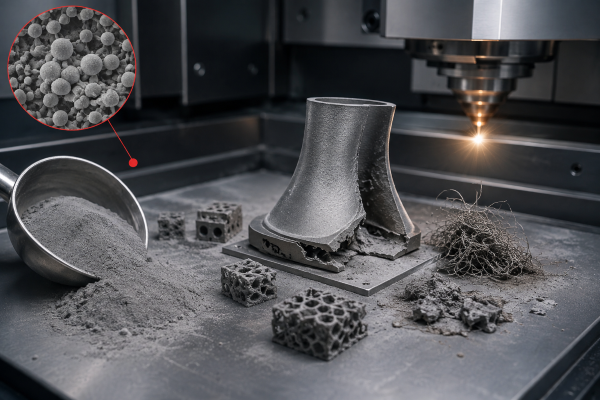
Metal additive manufacturing is entering a new stage of industrial maturity in 2026. What was once primarily a prototyping technology is now increasingly being integrated into real production environments, especially in aerospace, defense, automotive, and energy sectors.
The industry is shifting from “can we print it?” to “how do we scale it reliably and economically?”
1. Metal 3D Printing Becomes a Production Technology
One of the most significant trends in 2026 is the transition from prototyping to full production adoption.
According to industry analysis, laser powder bed fusion (LPBF) systems are increasingly being used for:
- End-use aerospace components
- Defense hardware
- High-performance industrial tooling
Manufacturers are no longer testing metal AM—they are deploying it inside certified production workflows.
2. AI and Smart Manufacturing Integration
AI is becoming deeply embedded in metal additive manufacturing systems.
Recent research shows AI-driven adaptive design and parameter optimization can significantly reduce trial-and-error cycles in metal printing processes, improving yield and reducing defects.
Key developments include:
- Real-time process monitoring
- AI-based scan path optimization
- Closed-loop thermal control
- Predictive defect detection
This trend is pushing metal 3D printing toward “self-optimizing machines.”
3. Aerospace and Defense Drive Market Growth
Aerospace and defense remain the strongest growth drivers for metal additive manufacturing in 2026.
Metal AM is increasingly used for:
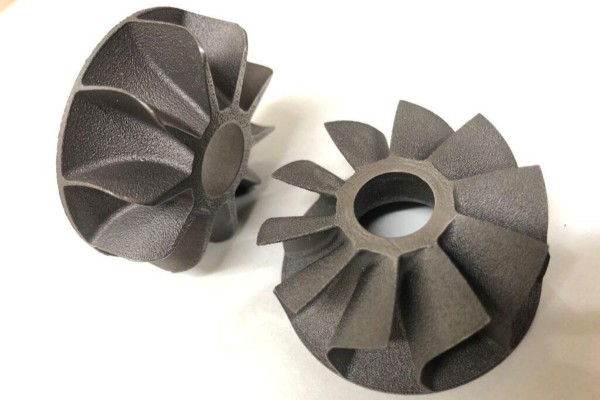
- Turbine components
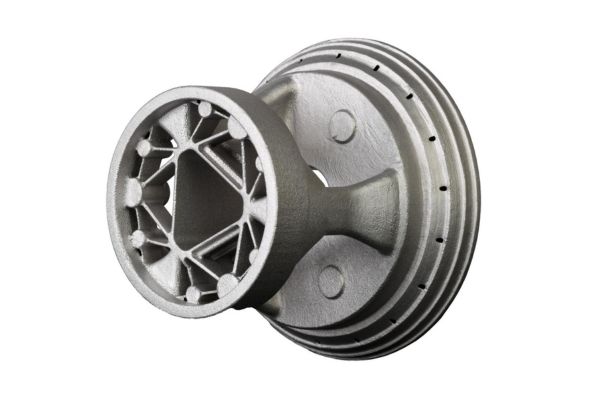
- Lightweight structural parts
- High-temperature engine systems
- Mission-critical defense hardware
A key reason is certification progress—parts are now meeting stricter aerospace qualification standards, enabling real flight-ready applications.
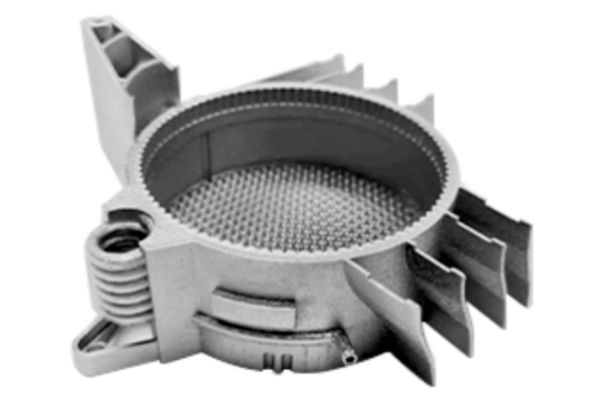
4. Hybrid Manufacturing Expands
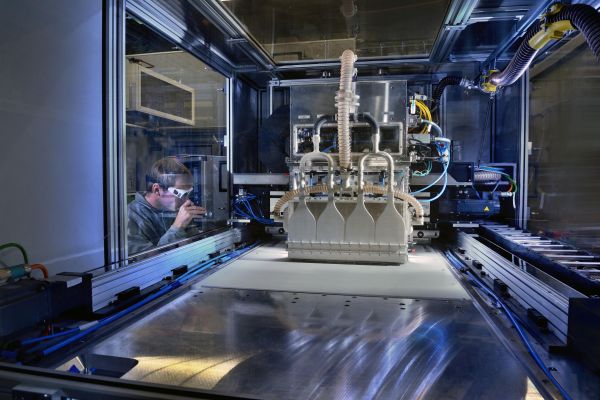
A major trend is the combination of additive manufacturing with traditional CNC machining.
Hybrid workflows allow manufacturers to:
- Print complex near-net shapes
- Finish critical surfaces via machining
- Reduce material waste
- Improve dimensional accuracy
This hybrid model is becoming the standard approach for high-precision metal components.
5. Supply Chain Resilience and Decentralized Production
Global supply chain uncertainty is accelerating the adoption of distributed manufacturing.
Companies are increasingly using metal 3D printing for:
- On-demand spare parts
- Localized production hubs
- Reduced inventory dependency
- Faster product iteration
This shift supports a more resilient and flexible manufacturing ecosystem.
Industry Outlook Summary
By 2026, metal additive manufacturing is defined by:
- Production-scale adoption
- AI-driven process optimization
- Aerospace & defense expansion
- Hybrid manufacturing workflows
- Decentralized production models
The industry is no longer experimental—it is becoming a core industrial manufacturing technology.
Want to Explore Metal AM Solutions?
At Techin Limited, we help manufacturers adopt next-generation metal additive manufacturing solutions—from equipment selection and materials to production optimization and post-processing workflows.
📩 Contact us to discuss how metal 3D printing can be integrated into your production strategy.