The Role of Build Orientation in Metal 3D Printing Quality
In metal additive manufacturing, build orientation is one of the most important factors affecting part quality, production efficiency, and overall cost. Even when using the same machine, material, and process parameters, different orientations can lead to significantly different results.
Understanding how build orientation influences printing outcomes can help manufacturers reduce support structures, improve surface quality, and achieve better mechanical performance.
What Is Build Orientation?
Build orientation refers to the position and angle of a part on the build platform during the printing process.
For example, a bracket can be printed:
- Flat on the build plate
- Standing vertically
- Tilted at a specific angle
Each orientation creates different printing conditions that affect the final part.
How Build Orientation Affects Surface Quality
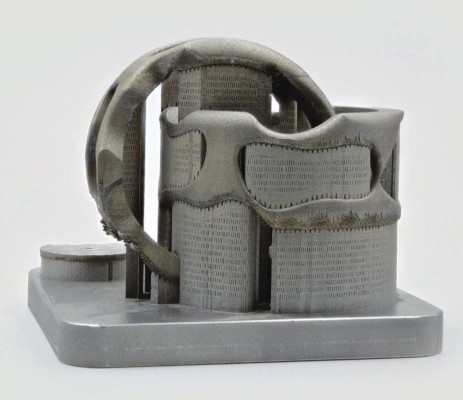
Surface finish often varies depending on the angle between the part surface and the build platform.
Horizontal surfaces may experience:
- Stair-step effects
- Increased roughness
- More support contact marks
Proper orientation can reduce visible layer lines and improve the appearance of critical surfaces.
Impact on Support Structures
Support structures are required to stabilize overhangs and dissipate heat during printing.
A poor orientation may result in:
- More support material
- Longer post-processing time
- Higher material consumption
Optimizing orientation can significantly reduce support requirements and lower production costs.
Mechanical Properties and Strength
Metal 3D printed parts may exhibit slight anisotropy, meaning properties can vary depending on the build direction.
Important considerations include:
- Load-bearing direction
- Fatigue performance
- Stress concentration areas
Engineers often orient parts so that critical loads align with the strongest build directions.
Printing Time and Productivity
Build height directly impacts printing time.
Generally:
- Taller parts require more layers
- More layers mean longer build times
- Longer builds increase machine occupancy
Reducing build height can often improve production efficiency.
Distortion and Residual Stress
During SLM printing, rapid heating and cooling generate thermal stresses.
Incorrect orientation may cause:
- Warping
- Distortion
- Cracking
- Dimensional inaccuracies
Strategic orientation helps distribute stresses more evenly throughout the build.
Best Practices for Build Orientation
When preparing a part for printing, consider:
Minimize Support Structures
Reduce overhangs whenever possible.
Protect Critical Surfaces
Orient important surfaces away from support contact areas.
Reduce Build Height
Shorter builds typically improve efficiency.
Consider Load Requirements
Align the build direction with functional requirements.
Evaluate Post-Processing
Ensure easy access for support removal and finishing.
Conclusion
Build orientation is much more than a setup parameter—it directly influences part quality, production cost, build time, and mechanical performance. By carefully evaluating orientation during the design stage, manufacturers can achieve better printing outcomes and improve the efficiency of metal additive manufacturing projects.
Need Help Optimizing Your Metal 3D Printed Parts?
At Techin Limited, we help customers optimize part design, build orientation, support strategies, and manufacturing workflows for metal additive manufacturing projects.
📩 Contact us today to discuss your application and discover how optimized build preparation can improve quality and reduce costs.